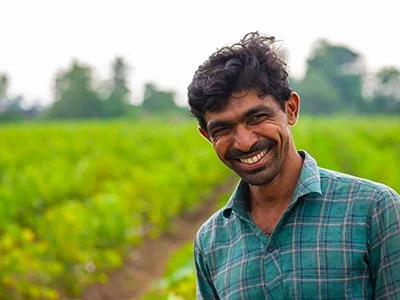
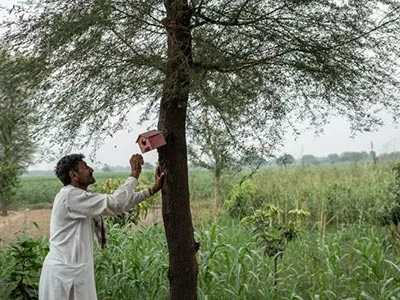
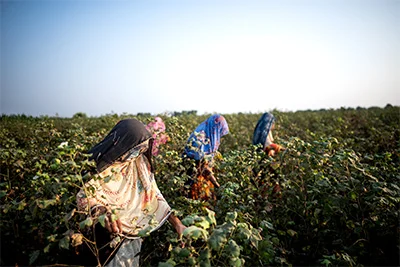
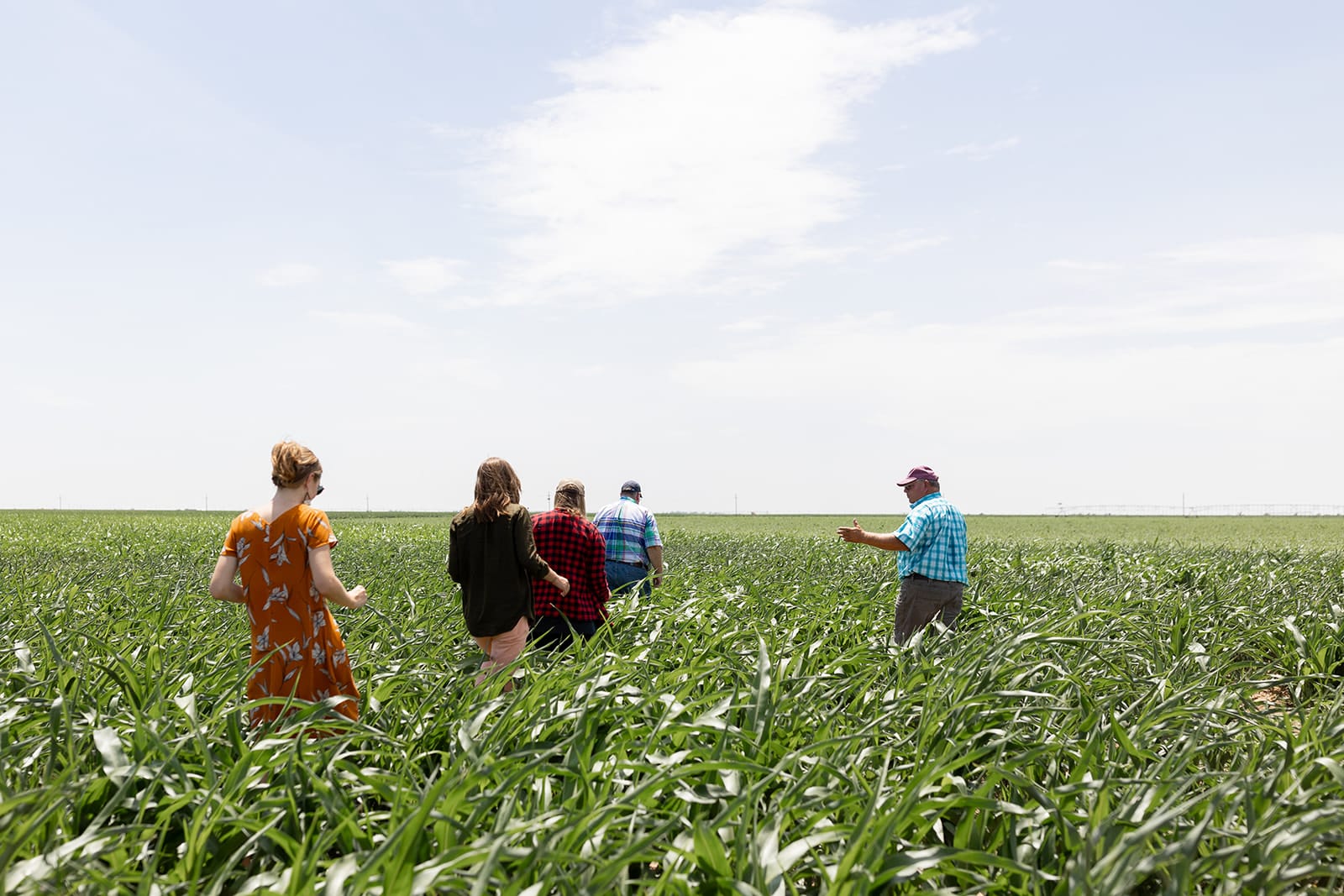
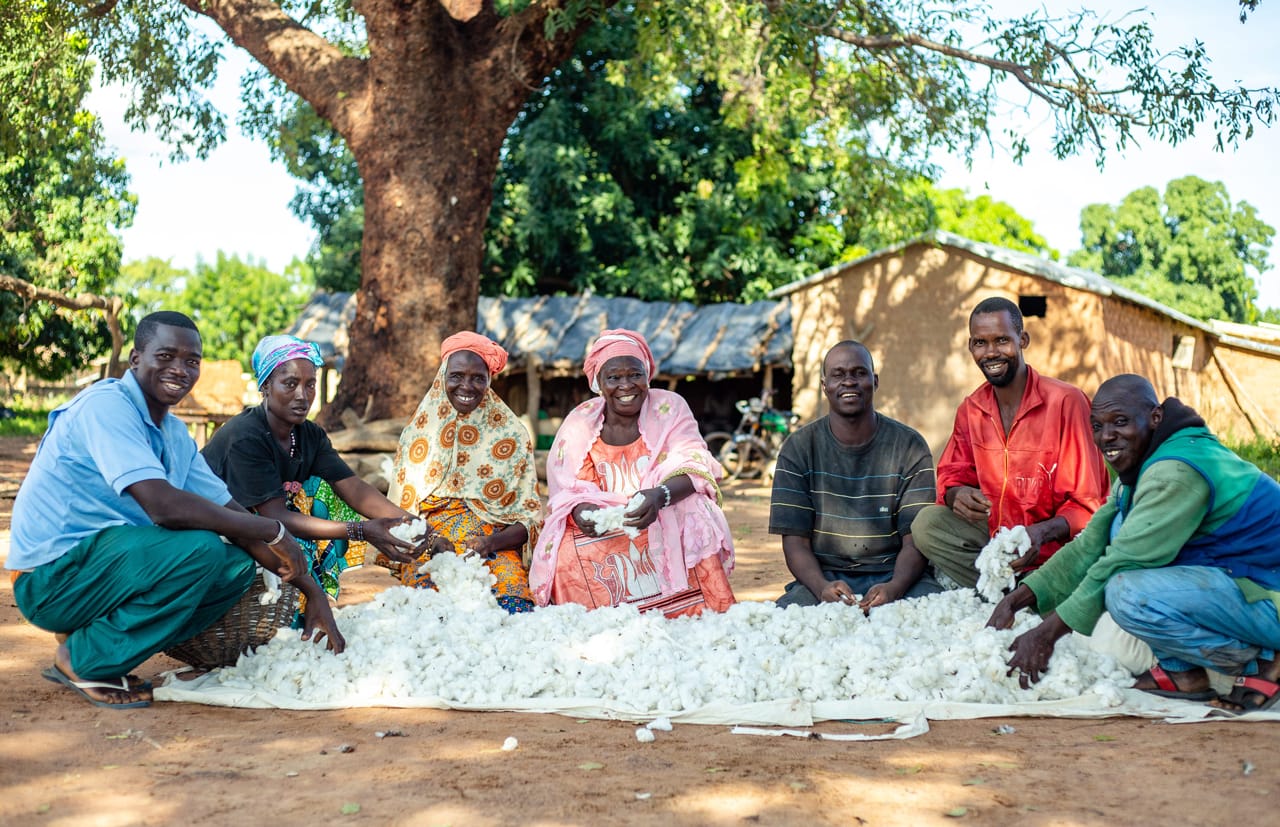
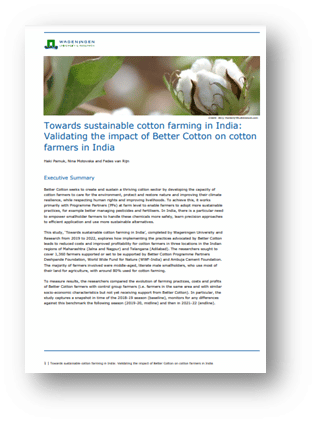
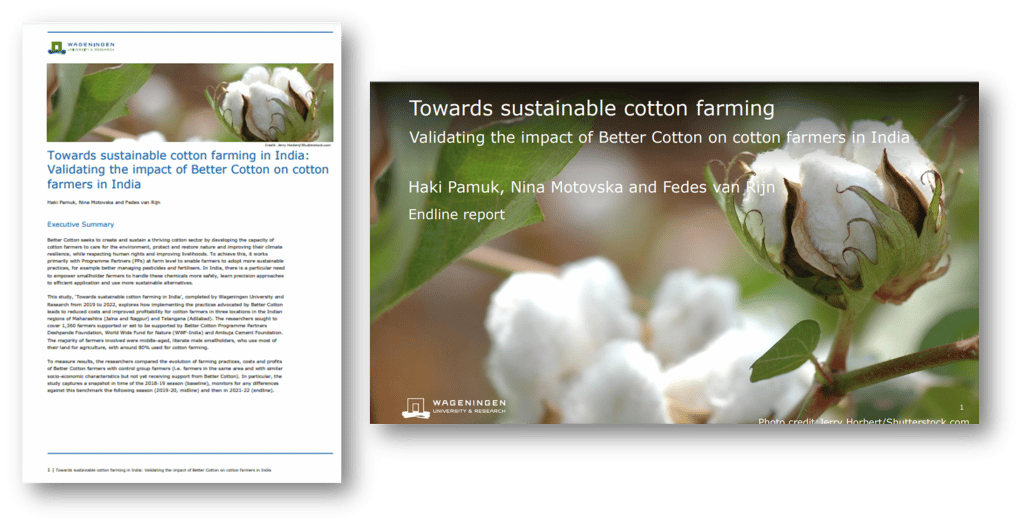
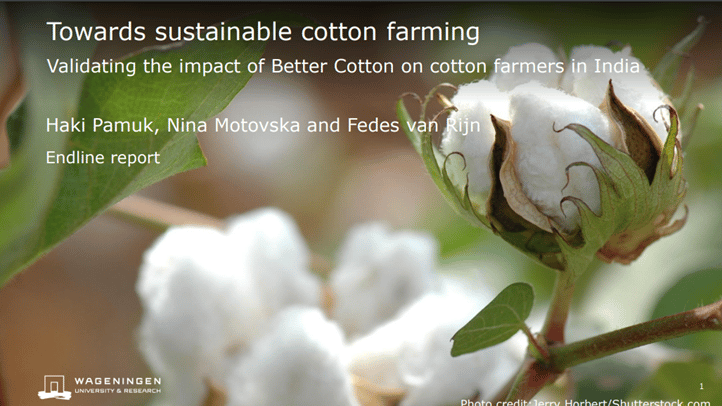
A brand-new study into the impact of the Better Cotton programme in India, conducted by Wageningen University and Research between 2019 and 2022, has found significant benefits for Better Cotton farmers in the region. The study, ‘Towards more sustainable cotton farming in India’, explores how cotton farmers who implemented Better Cotton recommended agricultural practices achieved improvements in profitability, reduced synthetic input use, and overall sustainability in farming.
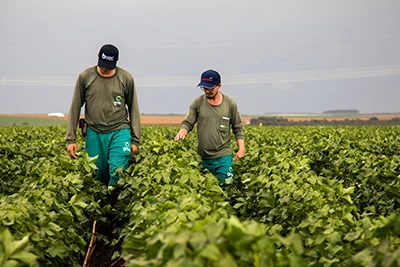
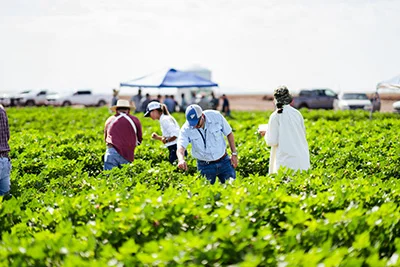
The study examined farmers in the Indian regions of Maharashtra (Nagpur) and Telangana (Adilabad), and compared the results with farmers in the same areas who did not follow Better Cotton guidance. Better Cotton works with Programme Partners at farm level to enable farmers to adopt more sustainable practices, for example, better managing pesticides and fertilisers.
The study found that Better Cotton Farmers were able to reduce costs, improve overall profitability, and safeguard the environment more effectively, compared with non-Better Cotton Farmers.
PDF
168.98 KB
Summary: Towards sustainable cotton farming: India Impact Study – Wageningen University & Research
Reducing pesticides and improving environmental impact
Overall, Better Cotton Farmers decreased their costs for synthetic insecticide by almost 75%, a notable decrease compared to non-Better Cotton Farmers. On average, Better Cotton Farmers in Adilabad and Nagpur saved US$44 per farmer during the season on synthetic insecticides and herbicides expenses during the season, significantly reducing their costs and their environmental impact.
Increasing overall profitability
Better Cotton Farmers in Nagpur received around US$0.135/kg more for their cotton than non-Better Cotton Farmers, the equivalent of a 13% price increase. Overall, Better Cotton contributed to an increase in farmers’ seasonal profitability of US$82 per acre, equivalent to about US$500 income for an average cotton farmer in Nagpur.
Better Cotton strives to ensure that cotton production is more sustainable. It’s important that farmers see improvements to their livelihoods, which will incentivise more farmers to adopt climate resilient agricultural practices. Studies like these show us that sustainability pays off, not just for reducing environmental impact, but also in overall profitability for farmers. We can take the learnings from this study and apply it in other cotton-growing regions.”
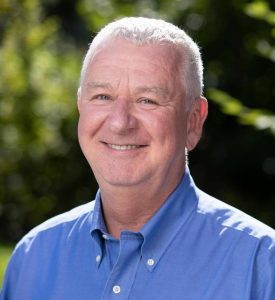
Alan McClay, Better Cotton CEO
For the baseline, the researchers surveyed 1,360 farmers. The majority of farmers involved were middle-aged, literate smallholders, who use most of their land for agriculture, with around 80% used for cotton farming.
Wageningen University in the Netherlands is a globally important centre for life sciences and agricultural research. Through this impact report, Better Cotton seeks to analyse the effectiveness of its programmes. The survey demonstrates the clear added value for profitability and environmental protections in the development of a more sustainable cotton sector.
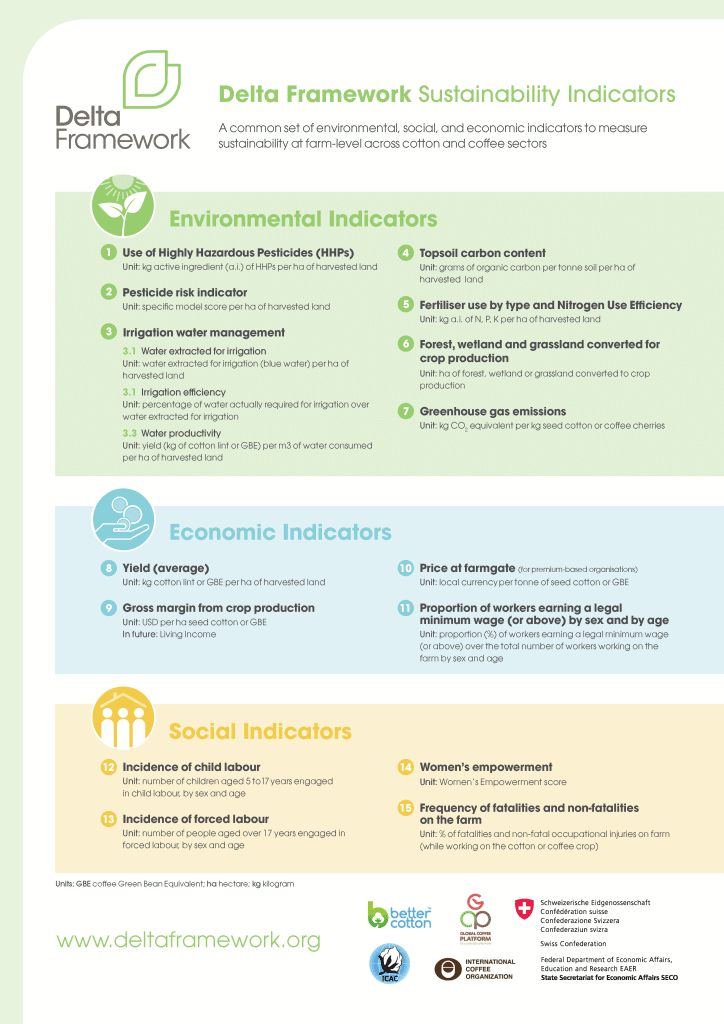
In the push to transform the way cotton and other crops are grown around the world, there remains a big roadblock: the lack of a common language for what sustainability means and how to report and measure progress. This was the impetus for the Delta Project, an initiative to bring leading sustainability standard organisations together to build a common framework for measuring and reporting on sustainability performance in the agricultural commodity sector, starting with cotton and coffee. The project was made possible by a grant from the ISEAL Innovations Fund, which is supported by the Swiss State Secretariat for Economic Affairs SECO and spearheaded by Better Cotton and the Global Coffee Platform (GCP).
Over the past three years, Delta Project partners — Better Cotton, GCP, the International Cotton Advisory Committee (ICAC) Expert Panel on Social, Environmental and Economic Performance (SEEP) of Cotton Production, the International Coffee Organisation (ICO) and the Cotton 2040 working group on impact metrics alignment* — developed, field-tested and published a set of 15 cross-commodity environmental, social and economic indicators to measure sustainability at the farm-level. A Memorandum of Understanding (MOU) was signed with the Cotton 2040 working group members to gradually incorporate relevant metrics and indicators into their monitoring and evaluation (M&E) systems.
The Delta indicators align with and allow users to report progress against the United Nations’ Sustainable Development Goals (SDGs), and the tools and methodologies are broad enough to be used by other agricultural sectors, as well.
To learn more about the project and what it means for Better Cotton Partners and Members, we spoke to Eliane Augareils, Senior Monitoring and Evaluation Manager at Better Cotton.
Why is it important to create a shared language for sustainability standards to communicate and report on sustainability?
Eliane Augareils, Senior Monitoring and Evaluation Manager at Better Cotton.
EA: Every standard has different ways of defining and measuring sustainability. In the cotton sector, for example, even when we are assessing the same thing, like water savings, we all have very different ways of measuring and reporting on it. That makes it challenging for a cotton stakeholder to understand the added value of sustainable cotton, whether that’s Better Cotton, organic, Fairtrade, etc. It is also impossible to aggregate the progress made by multiple standards. Now, if we implement what we committed to through the Delta Project, we can analyse the sustainable cotton sector’s progress as a whole.
What is the significance and value of the MOU signed by the Cotton 2040 working group?
EA: The MOU is an important result of the collaboration between all the cotton standards and organisations in the working group. It’s a commitment from these standards to integrate all the relevant Delta indicators into their respective M&E systems. It’s very important because it shows a strong willingness by the cotton sector to establish a common definition of sustainable cotton and a common way to measure progress. It also represents an increased spirit of collaboration between standards to act collectively towards our shared goals.
How were the indicators developed?
EA: We carried out a thorough consultation process for a year, reaching out to over 120 people representing 54 organisations from the agricultural private and public sectors. We first identified the sustainability impact priorities for the cotton and coffee sectors, and the stakeholders formulated nine shared goals across the three dimensions of sustainability — economic, social and environmental — all linked to the SDGs.
We then looked at over 200 indicators used by several commodity platforms and initiatives to measure progress towards these sustainability goals, in particular the Coffee Data Standard developed earlier by GCP, and the Guidance Framework on Measuring Sustainability in Cotton Farming Systems published by the ICAC-SEEP panel. Considering the interdependencies between the three sustainability dimensions, we recognised that the set of Delta indicators would need to be seen and adopted as a whole. This meant we needed to get to a much smaller set. We eventually selected 15 indicators, based on their global relevance, usefulness and feasibility in monitoring progress towards sustainable agricultural commodities. We then worked with experts to identify the best existing methodologies and tools, or develop new ones, to collect and analyse the data points needed for each indicator.
How were the indicators tested?
EA: Many of the organisations involved in the project ran pilots to test the draft indicators on real farms. These pilots provided critical feedback on the draft indicators, especially on the methodologies we developed to calculate them. Some indicators were very straightforward, for instance calculating yields or profitability, which is something we all do already. But other indicators like soil health, water and greenhouse gas (GHG) emissions were completely new for most of us. The pilots helped us understand the feasibility of implementation, and then we adapted the methodologies accordingly. For the water indicator, we refined it to make it more adaptable to different contexts, such as smallholder settings and different climates. In areas where monsoons are common, for example, the amount of water must be calculated differently. Without the pilots, we would only have a theoretical framework, and now it’s based on practice. Additionally, based on the lessons learnt from the pilots, we added limitations for each indicator, which allows us to be very transparent on the implementation and data collection challenges. For some indicators, like GHG emissions, that require a lot of data points, we also tried to identify which data points are the most important to get representative results.
How will the Delta Framework be integrated into existing M&E systems of the participating sustainability standards?
EA: So far, some of the standards — including Better Cotton, Fairtrade, Textile Exchange, the Organic Cotton Accelerator and Cotton Connect — have piloted several of the indicators, but they haven’t all been implemented in their M&E frameworks yet. The learnings of those pilots can be seen here.
Has Better Cotton already incorporated the Delta Framework indicators into the Better Cotton M&E system?
EA: Delta indicators 1, 2, 3a, 5, 8 and 9 are already included in our M&E system and indicators 12 and 13 are included in our assurance system. We are planning to gradually integrate the others into our revised M&E system.
How will the Delta Framework benefit Better Cotton Members and Partners?
EA: It will provide our members and partners with more robust and relevant information they can use to report their contribution to more sustainable cotton production. Instead of our previous eight results indicators, we will measure our progress on the 15 from the Delta Framework, plus a few others linked to our Principles & Criteria. This will enable Better Cotton Members and Partners to better track progress made towards the Better Cotton expected outcomes and impact.
The changes in how we report on GHG emissions and water will be of particular interest. We will systematize the calculation of GHG emissions and hopefully be able to give an approximate carbon footprint for Better Cotton cultivation in each of the countries where we are active. The indicators will also help us better assess the water footprint of cultivating Better Cotton. Until now, we only quantified the volume of water used by Better Cotton Farmers compared to non-Better Cotton Farmers, but in the near future, we will also calculate irrigation efficiency and water productivity. This will show how much cotton is produced per unit of water used and how much water is actually benefitting a farmer’s crop. In addition, we are now shifting our M&E system towards longitudinal analysis, in which we will analyse the same group of Better Cotton Farmers over multiple years, rather than comparing the performance of Better Cotton Farmers to the performance of non-Better Cotton Farmers each year. This will give us a better picture of our progress in the medium and long term.
What will these changes mean for Better Cotton farming communities?
EA: Standards often take a lot of time collecting participating farmers’ data, yet the farmers rarely see any results from this. One of our key goals for the Delta Project was to give farmers their data in a meaningful way. For example, a smallholder farmer doesn’t benefit much from knowing their carbon footprint, but they would benefit a lot from knowing the evolution of their soil organic content and of their pesticide and fertiliser use over the years and how that relates to the evolution of their yield and profitability. Even better if they know how that compares to their peers. The idea is to provide this information as soon as possible after the end of the harvest, so that farmers can use it to adequately prepare for the next season.
Will the Delta Framework demand more of farmers’ time for data collection?
EA: No, it shouldn’t, because one of the objectives of the pilot was to source more data from secondary sources like remote sensing devices, satellite images, or other data sources that can provide us with the same information with greater accuracy, all while minimizing time spent with the farmer.
How will we know if the indicators have been successful and supported progress towards the SDGs?
EA: Because the indicators are closely aligned with the SDG framework, we think the use of the Delta indicators will certainly help in tracking progress towards the SDGs. But in the end, the Delta Framework is only an M&E framework. It’s what the organisations do with this information and how they use it to guide farmers and partners in the field that will determine whether it helps them progress towards the actual goals.
Is data from different standards being stored in one place?
EA: At the moment, every organisation is in charge of keeping their data and consolidating it to report externally. At Better Cotton, we will use the data to create country ‘dashboards’ as well as dashboards for our Programme Partners so that they can see precisely what is going well and what is lagging.
Ideally, a neutral entity like ISEAL could create a centralized platform where data from all the (agriculture) standards could be stored, aggregated and analysed. We have developed comprehensive guidance in the Delta Framework Digitisation Package to support organisations in ensuring that the data is registered and stored in a way that would allow for aggregation in the future. However, the difficulty will be to convince the standards to share their data while complying with data privacy regulations.
What’s next for the Delta Framework and indicators?
EA: An indicators framework is a living thing. It is never ‘done’ and will need constant nurturing and evolution. But for now, the indicators, along with their corresponding methodologies, tools and guidance materials, are available on the Delta Framework website for anyone to use. Moving forward, we are looking for an organisation to take ownership of the Framework and regularly review the relevance of the indicators as well as the potential new tools and methodologies available to measure them.
What does this framework mean for the future of the cotton sector and for sustainable cotton production?
EA: A key point is the fact that different sustainable cotton actors will use a common language for sustainability and report in a harmonised way so that we can unify and strengthen our voice as a sector. The other benefit of this work is the increased collaboration among the main sustainable cotton actors. We consulted many organisations within the cotton sector, we piloted the indicators together, and we shared our learnings. I think that the outcome of the Delta Project so far is not only the framework itself, but also a stronger willingness to collaborate with each other — and that’s very important.
* The Cotton 2040 working group includes Better Cotton, Cotton Made in Africa, Cotton Connect, Fairtrade, myBMP, Organic Cotton Accelerator, Textile Exchange, Forum for the Future and the Laudes Foundation
After two years of adapted online engagement due to the pandemic, we are excited to share the dates for the next Better Cotton Conference.
Hosted in a hybrid format—with both virtual and in-person options for joining—we look forward to the opportunity to engage face-to-face again. As we consider the ongoing pandemic in our planning to allow safe and inclusive participation, details on our programme, registration, location and more will be shared soon.
Transforming the cotton sector is not the work of one organisation alone. Save 22-23 June in your calendars to join the Better Cotton community at this major event for stakeholders in the sustainable cotton sector.
Save the date and join us in shaping a more sustainable future for cotton!
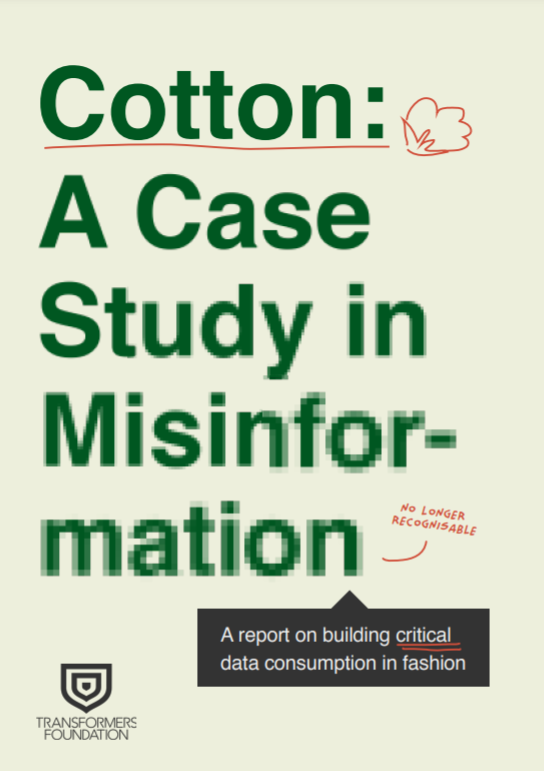
A new report published by Transformers Foundation investigates the use – and misuse – of data on the sustainability of the cotton sector, and aims to equip brands, journalists, NGOs, consumers, suppliers and others with the skills and understanding to use data accurately and transparently.
The report, Cotton: A Case Study in Misinformation debunks some of the commonly-shared ‘facts’ about cotton and textile production, such as the idea that cotton is an inherently ‘thirsty crop’, or the amount of water required to create a t-shirt. It also addresses commonly-cited claims about the use of pesticides in cotton farming. In both cases – water and pesticides – the report aims to provide current and accurate claims along with advice on how to use them without misleading audiences.
Damien Sanfilippo, Better Cotton’s Senior Director, Programmes contributed to the report and is quoted throughout:
“Everybody has an interest in data. And that’s good, because it means that everybody has an interest in sustainable development. But using data correctly is a skill. Right? And it needs to be done in a scientific manner.”
Damien Sanfilippo, Senior Director, Programmes at Better Cotton
The authors end with a set of calls-to-action, including to:
Send in information and new data to the foundation
Make data about environmental impacts open-source and publicly available
Today, on World Cotton Day, we are happy to be celebrating the farming communities around the world that provide us with this essential natural fibre.
The social and environmental challenges we came together to address in 2005, when Better Cotton was founded, are even more urgent today, and two of those challenges — climate change and gender equality — stand to be the key issues of our time. But there are also clear actions we can take to solve them.
When we look at climate change, we see the scale of the task ahead. At Better Cotton, we are drawing up our own climate change strategy to help farmers deal with these painful effects. Importantly, the strategy will also address the cotton sector’s contribution to climate change, which The Carbon Trust estimates at 220 million tonnes of CO2 emissions per year. The good news is that the technologies and practices to address these issues are already there — we only need to put them in place.
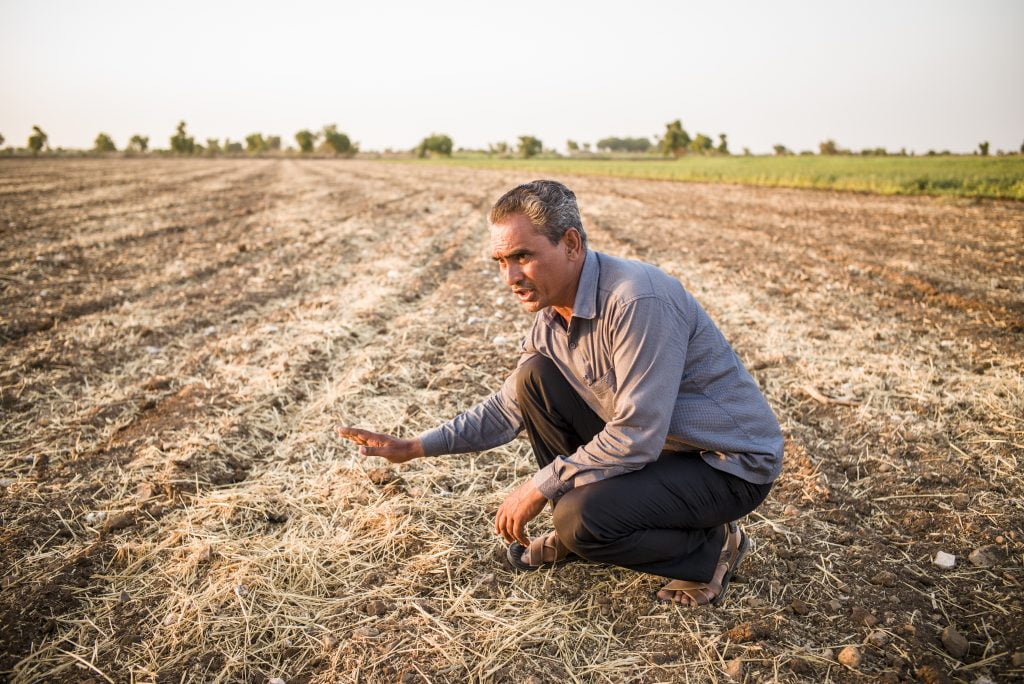
Cotton and climate change – an illustration from India
Photo Credit: BCI/Florian Lang
Location: Surendranagar, Gujarat, India. 2018.
Description: BCI Lead Farmer Vinodbhai Patel (48) in his field. While many farmers are burning the weed stubble, which is left on the field, Vinoodbhai is leaving the remaining stalks. The stalks will later get ploughed into the earth to increase the biomass in the soil.
At Better Cotton, we’ve witnessed the disruption that climate change brings first-hand. In Gujarat, India, Better Cotton Farmer Vinodbhai Patel struggled for years with low, irregular rainfall, poor soil quality and pest infestations on his cotton farm in the village of Haripar. But without access to knowledge, resources or capital, he, along with many other smallholder farmers in his region, relied partially on government subsidies for conventional fertilisers, as well as credit from local shopkeepers to buy traditional agro-chemical products. Over time, these products only degraded the soil further, making it harder to grow healthy plants.
Vinodbhai now uses exclusively biological fertilisers and pesticides to produce cotton on his six-hectare farm — and he is encouraging his peers to do the same. By managing insect-pests using ingredients sourced from nature — at no cost to him — and planting his cotton plants more densely, by 2018, he had reduced his pesticide costs by 80% compared to the 2015-2016 growing season, while increasing his overall production by over 100% and his profit by 200%.
The potential for change becomes even greater when we factor women into the equation. There’s mounting evidence that shows the relationship between gender equality and climate change adaptation. In other words, we are seeing that when women’s voices are elevated, they make decisions that benefit everyone, including driving the adoption of more sustainable practices.
Gender Equality – an illustration from Pakistan
Photo Credit: BCI/Khaula Jamil.
Location: Vehari District, Punjab, Pakistan, 2018.
Description: Almas Parveen, BCI Farmer and Field Facilitator, delivering a BCI training session to BCI Farmers and Farm-workers in the same Learning Group (LG). Almas is discussing how to select the correct cotton seed.
Almas Parveen, a cotton farmer in the Vehari district of Punjab, Pakistan is familiar with these struggles. In her corner of rural Pakistan, entrenched gender roles mean women often have little opportunity to influence farming practices or business decisions, and female cotton workers are often restricted to low paid, manual tasks, with less job security than men.
Almas, however, was always determined to overcome these norms. Since 2009, she’s been running her family’s nine-hectare cotton farm herself. While that alone was remarkable, her motivation didn’t stop there. With support from our Implementing Partner in Pakistan, Almas became a Better Cotton Field Facilitator to enable other farmers — both men and women — to learn and benefit from sustainable farming techniques. At first, Almas’ faced opposition from members of her community, but in time, the farmers’ perceptions changed as her technical knowledge and sound advice resulted in tangible benefits on their farms. In 2018, Almas increased her yields by 18% and her profits by 23% compared to the previous year. She also achieved a 35% reduction in pesticide use. In the 2017-18 season, the average Better Cotton Farmer in Pakistan increased their yields by 15%, and reduced their pesticide use by 17%, in comparison to non-Better Cotton Farmers.
The issues of climate change and gender equality serve as powerful lenses with which to view the current state of the cotton sector. They show us that our vision of a sustainable world, where cotton farmers and workers know how to cope — with threats to the environment, low productivity and even limiting societal norms — is within reach. They also show us that a new generation of cotton farming communities will be able to make a decent living, have a strong voice in the supply chain and meet growing consumer demand for more sustainable cotton.
The bottom line is that transforming the cotton sector is not the work of one organisation alone. So, on this World Cotton Day, as we all take this time to listen and learn from each other, reflecting on the importance and role of cotton around the world, I’d like to encourage us to band together and leverage our resources and networks.
Together, we can deepen our impact and catalyse systemic change. Together, we can make the transformation to a sustainable cotton sector — and world — a reality.
On 4 October 2021, Ecotextile News published “Can cotton cool climate change?”, exploring the role cotton growing plays in climate change. The article looks closely at Better Cotton’s climate strategy and draws from an interview with Lena Staafgard, COO, and Chelsea Reinhardt, Director of Standards and Assurance, to understand how we plan to impact climate change mitigation and adaptation.
Accelerating the pace of change
With Better Cotton’s recent study on GHG emissions commissioned with Anthesis and our work with Cotton 2040, we now have better information to identify the areas contributing most to emissions and which regions will be most affected by climate change. Our existing Standard and programmes implemented on-the-ground by partners and farmers across the Better Cotton network currently address these issue areas. But we need to act fast to build on what already exists to deepen our impact.
What we are looking to do really is to refine our focus and accelerate the pace of change, to have a deeper impact in those particular areas that are the big drivers of emissions.
– Chelsea Reinhardt, Director of Standards and Assurance
Collaborating across the cotton sector
The recent Cotton 2040 study shows that half of all cotton growing areas are at high risk of extreme weather conditions in the coming decades, and we have the opportunity to take action in these regions with our potential to convene relevant stakeholders. There are challenges in providing solutions that are relevant to localised conditions, so we are using our nuanced understanding of these issues and are in a position to address them with appropriate strategies through the network we have. Ensuring we bring smallholder and large farm contexts into our approach is important.
We should be able to get there, but it’s going to be difficult and it’s going to require a lot of collaboration, pulling in the technology and the knowledge we have at the large farms and finding ways of making it available at smallholder level where so much of the world’s agriculture takes place.
Lena Staafgard, COO
Better Cotton is in a position where we have the resources and network to collaborate towards change. Join our upcoming Member-Only Webinar to learn more about Better Cotton’s 2030 Strategy on Climate Change.
Do you want to know what the largest cotton sustainability programme in the world is up to? Keep up to date with the latest developments and hear from BCI Farmers, Partners and Members in the new BCI Quarterly Newsletter. BCI Members also receive a Monthly Member Update.
Leave a few details below and you’ll receive the next newsletter.
The Better Cotton Living Income Project: Insights from India
Please fill in this request form to receive the full report: The Better Cotton Living Income Project: Insights from India