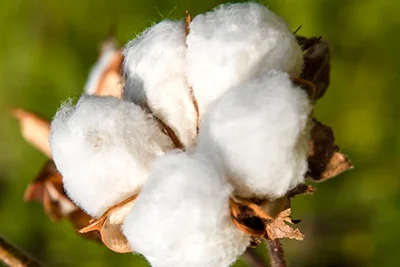
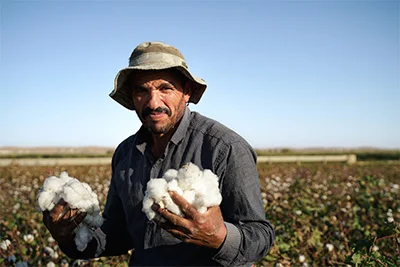
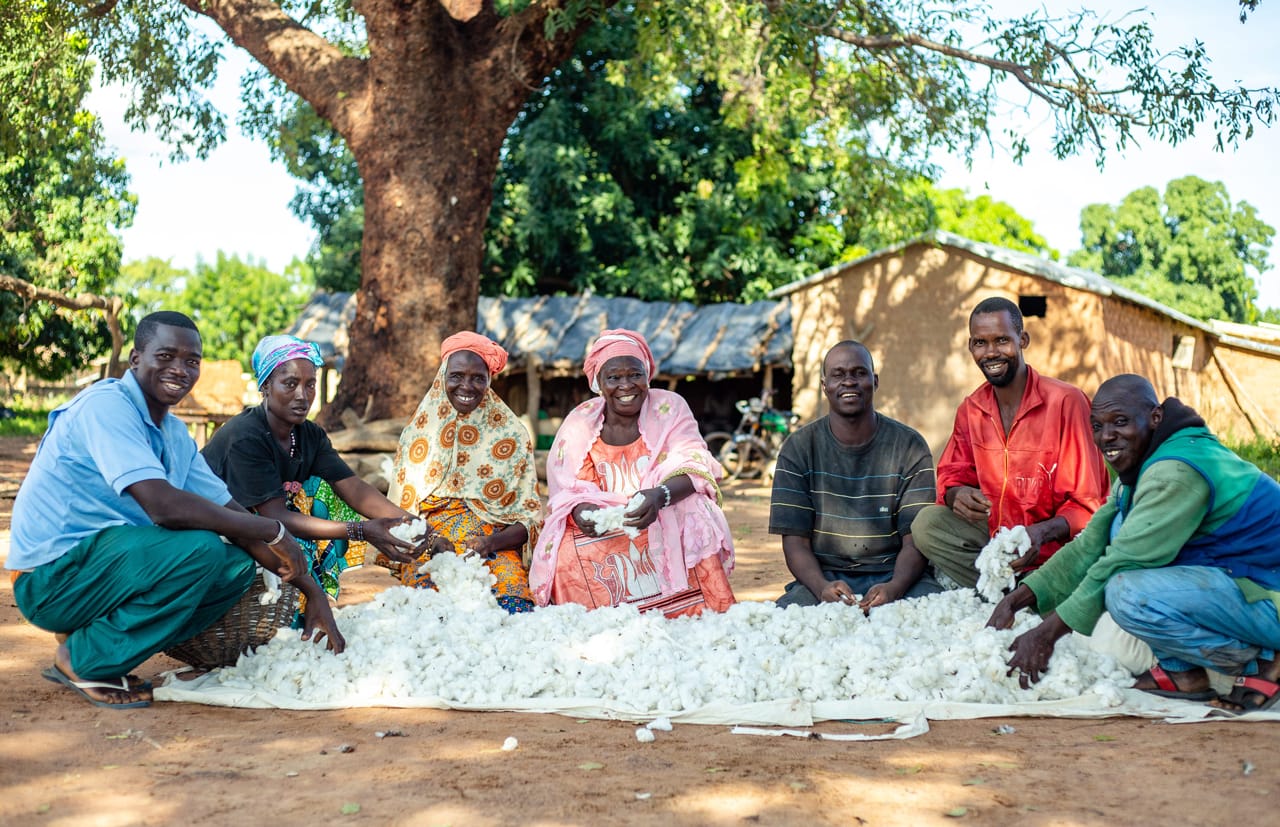
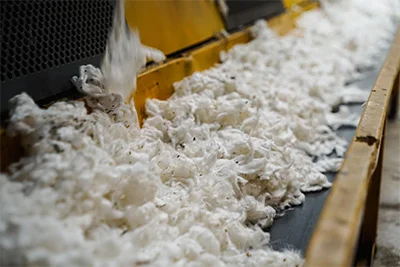
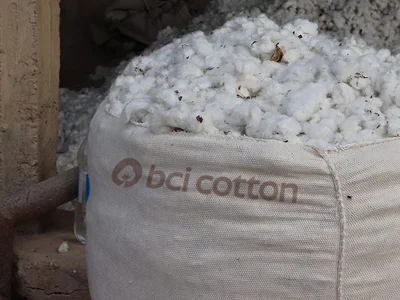
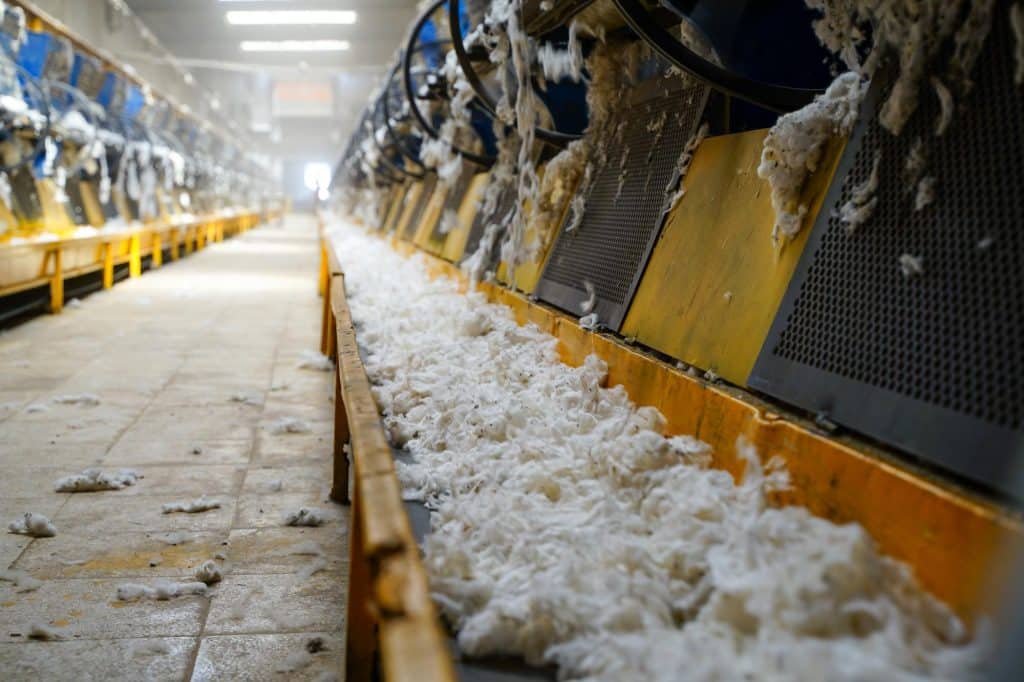
Photo Credit: Better Cotton/Eugénie Bacher. Harran, Turkey, 2022. Cotton going through a ginning machine, Mehmet Kızılkaya Tekstil.
Nick Gordon, Traceability Programme Officer at Better Cotton
By Nick Gordon, Traceability Programme Officer, Better Cotton
Cotton can be one of the most challenging commodities to trace. The geographical journey of a cotton t-shirt can span three continents before it reaches the shop floor, often changing hands seven times or more. Agents, intermediaries and traders operate at every stage, providing fundamental services from assessing quality to linking farmers and other players to markets. And there’s no one clear path – cotton bales from different countries can be spun into the same yarn and sent to multiple different mills to be woven into fabric. This makes it challenging to trace the cotton in any given product back to its source.
To enable the physical tracing of cotton, Better Cotton is developing its own traceability capability through the existing Better Cotton Platform, set to launch in late-2023. To support this, we’ve created a series of supply chain maps to better understand the realities of key cotton trading countries. We’ve used data insights, stakeholder interviews, and the experiences of local supply chain actors to shed light on how things work in different countries and regions, and identify the key challenges to traceability.
Central to the programme will be our evolving Chain of Custody Standard (which is currently out for public consultation). This will prompt operational changes for manufacturers and traders alike. It’s vital the Standard acknowledges regional variation and is achievable for suppliers in the Better Cotton network. We’ll keep applying the knowledge and lessons we’re learning to ensure any changes meet the wants and needs of Better Cotton stakeholders.
What have we learnt so far?
Informal economies play an important role in Better Cotton producing countries
It’s no secret that enabling traceability is more straightforward in larger, vertically integrated supply networks. The fewer times material changes hands, the shorter the paper trail, and the greater likelihood of being able to trace cotton back to its source. However, not all transactions are equally documentable, and the reality is that informal work acts as a crucial support mechanism for many smaller actors, connecting them with resources and markets.
Traceability should empower people who are already often marginalised by global supply chains and protect smallholders’ access to markets. Engaging with stakeholders and responding to their needs and concerns is a critical first step in making sure these voices don’t go unheard.
It’s important to create the right digital solutions
New, innovative technology solutions are available for use in the cotton supply chain – everything from smart devices and GPS technology on farms to state-of-the-art integrated computer systems on the factory floor. However, not all actors in the sector – many of whom are smallholder farmers or small to medium-sized businesses – have embraced technology to the same extent. When introducing a digital traceability system, we need to consider varying levels of digital literacy, and make sure any system we introduce is readily understandable and easy to use, while also fitting the needs of users. In particular, we’re conscious that the gaps are greatest at the early stages of the supply chain, among cotton farms and ginners, for example. Yet it’s precisely at these stages that we need the most accurate data – this is essential to ensuring physical traceability.
Better Cotton will be testing two new traceability platforms in an India pilot this year. Prior to roll out of any new digital system, capacity building and training will be crucial.
Economic challenges are changing behaviours in the marketplace
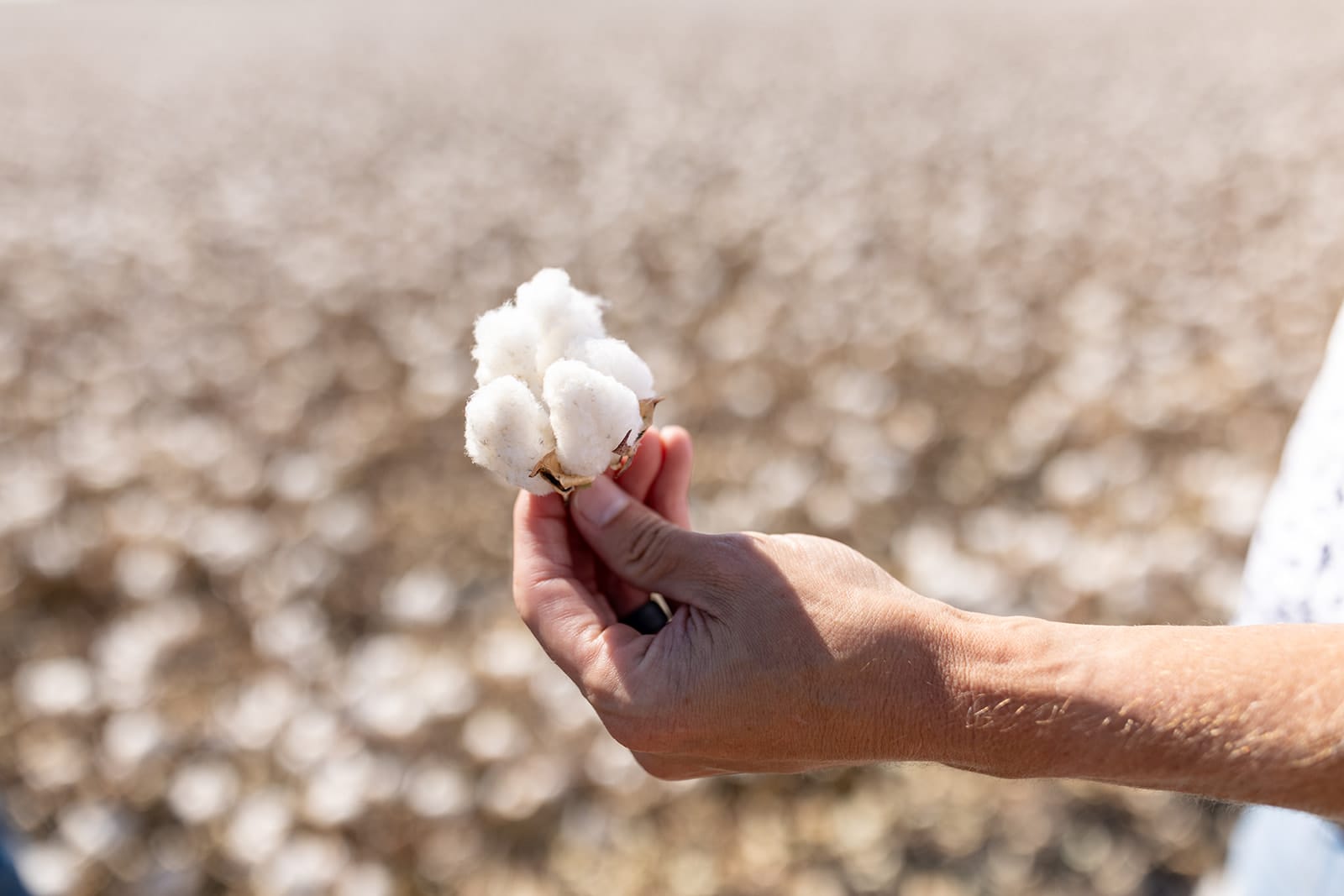
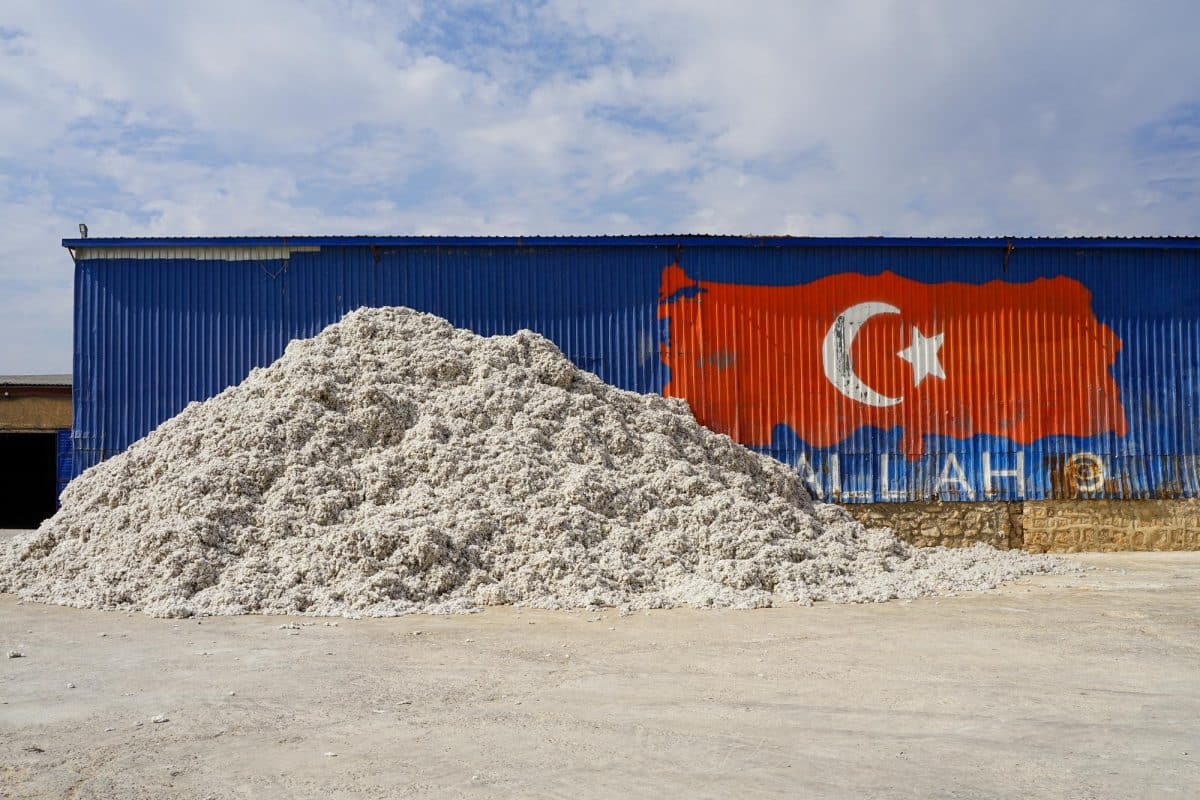
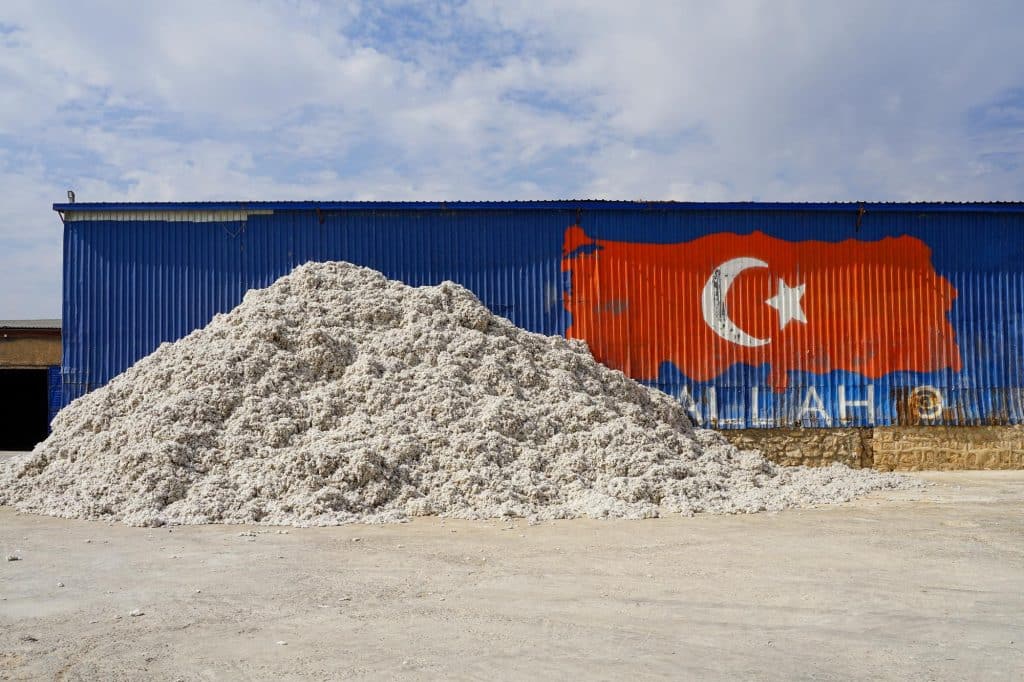
Photo Credit: Better Cotton/Eugénie Bacher. Harran, Turkey, 2022. Pile of cotton, Mehmet Kızılkaya Tekstil.
The impact of the pandemic, coupled with challenging economic conditions, are changing behaviours in cotton supply chains. For example, in light of fluctuating cotton prices, yarn producers in certain countries are replenishing stocks at a more cautious pace than others. Some suppliers are concentrating on long-term supplier relationships, or searching for new supply networks. Predicting how much customers might order is becoming less easy, and for many, margins remain low.
Amid this uncertainty, the opportunity to sell physically traceable cotton could offer a market advantage. So, in the same way that cultivating Better Cotton helps farmers to achieve better prices for their cotton – 13% more for their cotton than conventional cotton farmers in Nagpur, according to a Wageningen University study – traceability also presents a real opportunity to create further value for Better Cotton Farmers. For example, carbon insetting frameworks, underpinned by a traceability solution, could reward farmers for implementing sustainable practices. Better Cotton is already engaging with all stakeholders across the supply chain to understand the business case for traceability and identify ways to increase value for members.
Get involved
Better Cotton is currently revising its Chain of Custody Standard/Guidelines. The public consultation is now live and will conclude on 25 November 2022. Access the consultation, documents and related resources here.
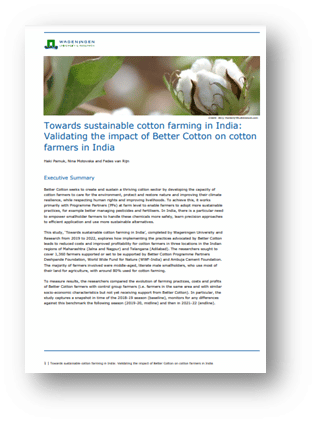
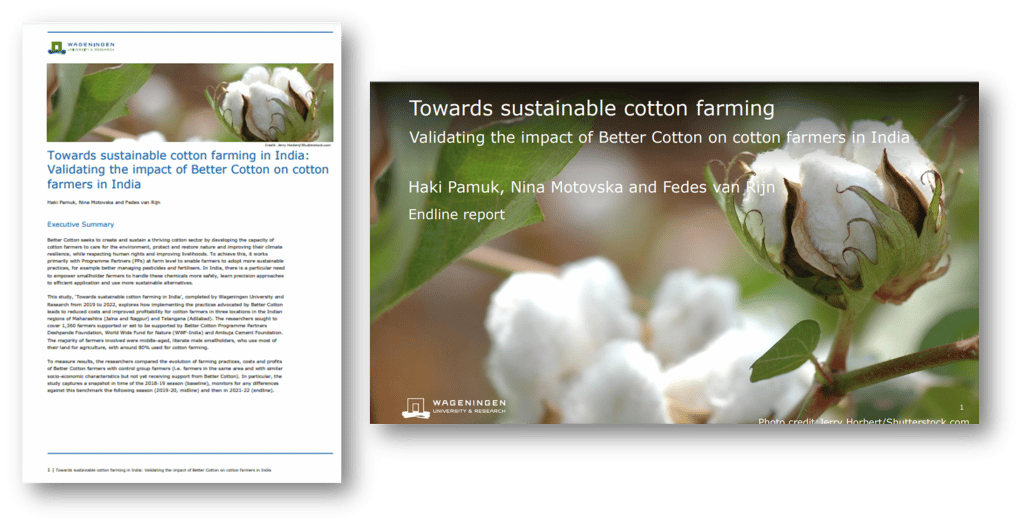
A brand-new study into the impact of the Better Cotton programme in India, conducted by Wageningen University and Research between 2019 and 2022, has found significant benefits for Better Cotton farmers in the region. The study, ‘Towards more sustainable cotton farming in India’, explores how cotton farmers who implemented Better Cotton recommended agricultural practices achieved improvements in profitability, reduced synthetic input use, and overall sustainability in farming.
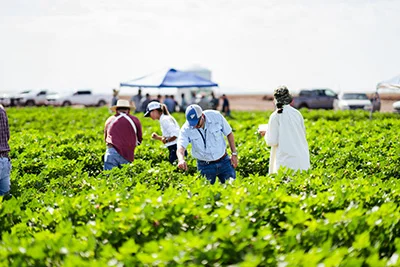
The study examined farmers in the Indian regions of Maharashtra (Nagpur) and Telangana (Adilabad), and compared the results with farmers in the same areas who did not follow Better Cotton guidance. Better Cotton works with Programme Partners at farm level to enable farmers to adopt more sustainable practices, for example, better managing pesticides and fertilisers.
The study found that Better Cotton Farmers were able to reduce costs, improve overall profitability, and safeguard the environment more effectively, compared with non-Better Cotton Farmers.
PDF
168.98 KB
Summary: Towards sustainable cotton farming: India Impact Study – Wageningen University & Research
Reducing pesticides and improving environmental impact
Overall, Better Cotton Farmers decreased their costs for synthetic insecticide by almost 75%, a notable decrease compared to non-Better Cotton Farmers. On average, Better Cotton Farmers in Adilabad and Nagpur saved US$44 per farmer during the season on synthetic insecticides and herbicides expenses during the season, significantly reducing their costs and their environmental impact.
Increasing overall profitability
Better Cotton Farmers in Nagpur received around US$0.135/kg more for their cotton than non-Better Cotton Farmers, the equivalent of a 13% price increase. Overall, Better Cotton contributed to an increase in farmers’ seasonal profitability of US$82 per acre, equivalent to about US$500 income for an average cotton farmer in Nagpur.
Better Cotton strives to ensure that cotton production is more sustainable. It’s important that farmers see improvements to their livelihoods, which will incentivise more farmers to adopt climate resilient agricultural practices. Studies like these show us that sustainability pays off, not just for reducing environmental impact, but also in overall profitability for farmers. We can take the learnings from this study and apply it in other cotton-growing regions.”
Alan McClay, Better Cotton CEO
For the baseline, the researchers surveyed 1,360 farmers. The majority of farmers involved were middle-aged, literate smallholders, who use most of their land for agriculture, with around 80% used for cotton farming.
Wageningen University in the Netherlands is a globally important centre for life sciences and agricultural research. Through this impact report, Better Cotton seeks to analyse the effectiveness of its programmes. The survey demonstrates the clear added value for profitability and environmental protections in the development of a more sustainable cotton sector.
In the push to transform the way cotton and other crops are grown around the world, there remains a big roadblock: the lack of a common language for what sustainability means and how to report and measure progress. This was the impetus for the Delta Project, an initiative to bring leading sustainability standard organisations together to build a common framework for measuring and reporting on sustainability performance in the agricultural commodity sector, starting with cotton and coffee. The project was made possible by a grant from the ISEAL Innovations Fund, which is supported by the Swiss State Secretariat for Economic Affairs SECO and spearheaded by Better Cotton and the Global Coffee Platform (GCP).
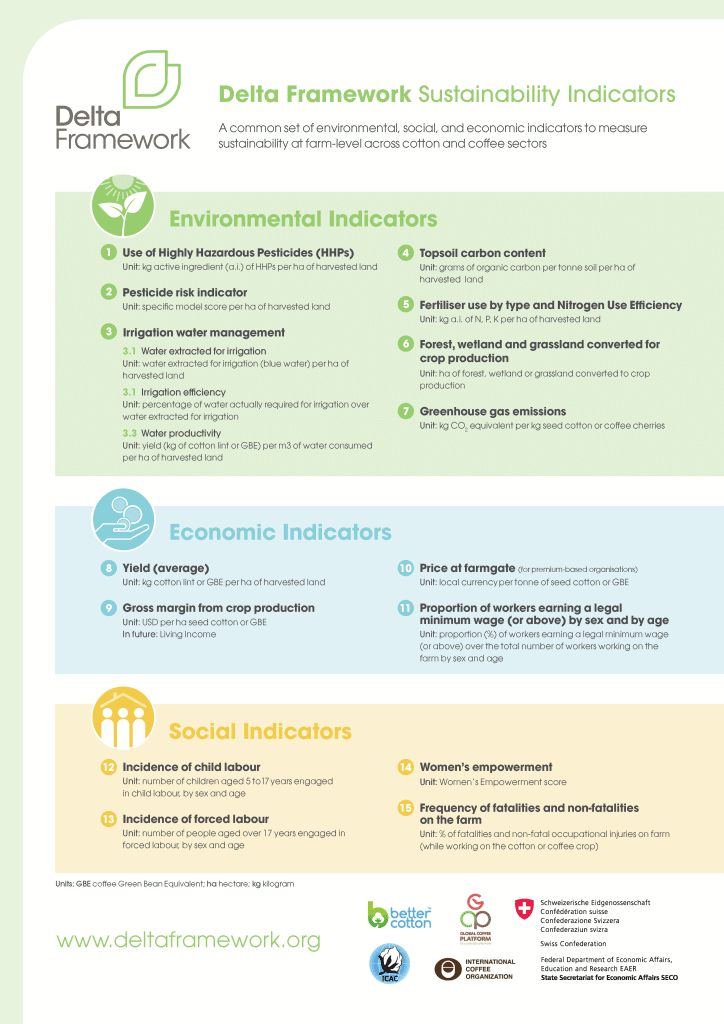
Over the past three years, Delta Project partners — Better Cotton, GCP, the International Cotton Advisory Committee (ICAC) Expert Panel on Social, Environmental and Economic Performance (SEEP) of Cotton Production, the International Coffee Organisation (ICO) and the Cotton 2040 working group on impact metrics alignment* — developed, field-tested and published a set of 15 cross-commodity environmental, social and economic indicators to measure sustainability at the farm-level. A Memorandum of Understanding (MOU) was signed with the Cotton 2040 working group members to gradually incorporate relevant metrics and indicators into their monitoring and evaluation (M&E) systems.
The Delta indicators align with and allow users to report progress against the United Nations’ Sustainable Development Goals (SDGs), and the tools and methodologies are broad enough to be used by other agricultural sectors, as well.
To learn more about the project and what it means for Better Cotton Partners and Members, we spoke to Eliane Augareils, Senior Monitoring and Evaluation Manager at Better Cotton.
Why is it important to create a shared language for sustainability standards to communicate and report on sustainability?
Eliane Augareils, Senior Monitoring and Evaluation Manager at Better Cotton.
EA: Every standard has different ways of defining and measuring sustainability. In the cotton sector, for example, even when we are assessing the same thing, like water savings, we all have very different ways of measuring and reporting on it. That makes it challenging for a cotton stakeholder to understand the added value of sustainable cotton, whether that’s Better Cotton, organic, Fairtrade, etc. It is also impossible to aggregate the progress made by multiple standards. Now, if we implement what we committed to through the Delta Project, we can analyse the sustainable cotton sector’s progress as a whole.
What is the significance and value of the MOU signed by the Cotton 2040 working group?
EA: The MOU is an important result of the collaboration between all the cotton standards and organisations in the working group. It’s a commitment from these standards to integrate all the relevant Delta indicators into their respective M&E systems. It’s very important because it shows a strong willingness by the cotton sector to establish a common definition of sustainable cotton and a common way to measure progress. It also represents an increased spirit of collaboration between standards to act collectively towards our shared goals.
How were the indicators developed?
EA: We carried out a thorough consultation process for a year, reaching out to over 120 people representing 54 organisations from the agricultural private and public sectors. We first identified the sustainability impact priorities for the cotton and coffee sectors, and the stakeholders formulated nine shared goals across the three dimensions of sustainability — economic, social and environmental — all linked to the SDGs.
We then looked at over 200 indicators used by several commodity platforms and initiatives to measure progress towards these sustainability goals, in particular the Coffee Data Standard developed earlier by GCP, and the Guidance Framework on Measuring Sustainability in Cotton Farming Systems published by the ICAC-SEEP panel. Considering the interdependencies between the three sustainability dimensions, we recognised that the set of Delta indicators would need to be seen and adopted as a whole. This meant we needed to get to a much smaller set. We eventually selected 15 indicators, based on their global relevance, usefulness and feasibility in monitoring progress towards sustainable agricultural commodities. We then worked with experts to identify the best existing methodologies and tools, or develop new ones, to collect and analyse the data points needed for each indicator.
How were the indicators tested?
EA: Many of the organisations involved in the project ran pilots to test the draft indicators on real farms. These pilots provided critical feedback on the draft indicators, especially on the methodologies we developed to calculate them. Some indicators were very straightforward, for instance calculating yields or profitability, which is something we all do already. But other indicators like soil health, water and greenhouse gas (GHG) emissions were completely new for most of us. The pilots helped us understand the feasibility of implementation, and then we adapted the methodologies accordingly. For the water indicator, we refined it to make it more adaptable to different contexts, such as smallholder settings and different climates. In areas where monsoons are common, for example, the amount of water must be calculated differently. Without the pilots, we would only have a theoretical framework, and now it’s based on practice. Additionally, based on the lessons learnt from the pilots, we added limitations for each indicator, which allows us to be very transparent on the implementation and data collection challenges. For some indicators, like GHG emissions, that require a lot of data points, we also tried to identify which data points are the most important to get representative results.
How will the Delta Framework be integrated into existing M&E systems of the participating sustainability standards?
EA: So far, some of the standards — including Better Cotton, Fairtrade, Textile Exchange, the Organic Cotton Accelerator and Cotton Connect — have piloted several of the indicators, but they haven’t all been implemented in their M&E frameworks yet. The learnings of those pilots can be seen here.
Has Better Cotton already incorporated the Delta Framework indicators into the Better Cotton M&E system?
EA: Delta indicators 1, 2, 3a, 5, 8 and 9 are already included in our M&E system and indicators 12 and 13 are included in our assurance system. We are planning to gradually integrate the others into our revised M&E system.
How will the Delta Framework benefit Better Cotton Members and Partners?
EA: It will provide our members and partners with more robust and relevant information they can use to report their contribution to more sustainable cotton production. Instead of our previous eight results indicators, we will measure our progress on the 15 from the Delta Framework, plus a few others linked to our Principles & Criteria. This will enable Better Cotton Members and Partners to better track progress made towards the Better Cotton expected outcomes and impact.
The changes in how we report on GHG emissions and water will be of particular interest. We will systematize the calculation of GHG emissions and hopefully be able to give an approximate carbon footprint for Better Cotton cultivation in each of the countries where we are active. The indicators will also help us better assess the water footprint of cultivating Better Cotton. Until now, we only quantified the volume of water used by Better Cotton Farmers compared to non-Better Cotton Farmers, but in the near future, we will also calculate irrigation efficiency and water productivity. This will show how much cotton is produced per unit of water used and how much water is actually benefitting a farmer’s crop. In addition, we are now shifting our M&E system towards longitudinal analysis, in which we will analyse the same group of Better Cotton Farmers over multiple years, rather than comparing the performance of Better Cotton Farmers to the performance of non-Better Cotton Farmers each year. This will give us a better picture of our progress in the medium and long term.
What will these changes mean for Better Cotton farming communities?
EA: Standards often take a lot of time collecting participating farmers’ data, yet the farmers rarely see any results from this. One of our key goals for the Delta Project was to give farmers their data in a meaningful way. For example, a smallholder farmer doesn’t benefit much from knowing their carbon footprint, but they would benefit a lot from knowing the evolution of their soil organic content and of their pesticide and fertiliser use over the years and how that relates to the evolution of their yield and profitability. Even better if they know how that compares to their peers. The idea is to provide this information as soon as possible after the end of the harvest, so that farmers can use it to adequately prepare for the next season.
Will the Delta Framework demand more of farmers’ time for data collection?
EA: No, it shouldn’t, because one of the objectives of the pilot was to source more data from secondary sources like remote sensing devices, satellite images, or other data sources that can provide us with the same information with greater accuracy, all while minimizing time spent with the farmer.
How will we know if the indicators have been successful and supported progress towards the SDGs?
EA: Because the indicators are closely aligned with the SDG framework, we think the use of the Delta indicators will certainly help in tracking progress towards the SDGs. But in the end, the Delta Framework is only an M&E framework. It’s what the organisations do with this information and how they use it to guide farmers and partners in the field that will determine whether it helps them progress towards the actual goals.
Is data from different standards being stored in one place?
EA: At the moment, every organisation is in charge of keeping their data and consolidating it to report externally. At Better Cotton, we will use the data to create country ‘dashboards’ as well as dashboards for our Programme Partners so that they can see precisely what is going well and what is lagging.
Ideally, a neutral entity like ISEAL could create a centralized platform where data from all the (agriculture) standards could be stored, aggregated and analysed. We have developed comprehensive guidance in the Delta Framework Digitisation Package to support organisations in ensuring that the data is registered and stored in a way that would allow for aggregation in the future. However, the difficulty will be to convince the standards to share their data while complying with data privacy regulations.
What’s next for the Delta Framework and indicators?
EA: An indicators framework is a living thing. It is never ‘done’ and will need constant nurturing and evolution. But for now, the indicators, along with their corresponding methodologies, tools and guidance materials, are available on the Delta Framework website for anyone to use. Moving forward, we are looking for an organisation to take ownership of the Framework and regularly review the relevance of the indicators as well as the potential new tools and methodologies available to measure them.
What does this framework mean for the future of the cotton sector and for sustainable cotton production?
EA: A key point is the fact that different sustainable cotton actors will use a common language for sustainability and report in a harmonised way so that we can unify and strengthen our voice as a sector. The other benefit of this work is the increased collaboration among the main sustainable cotton actors. We consulted many organisations within the cotton sector, we piloted the indicators together, and we shared our learnings. I think that the outcome of the Delta Project so far is not only the framework itself, but also a stronger willingness to collaborate with each other — and that’s very important.
* The Cotton 2040 working group includes Better Cotton, Cotton Made in Africa, Cotton Connect, Fairtrade, myBMP, Organic Cotton Accelerator, Textile Exchange, Forum for the Future and the Laudes Foundation
With our partners, we are pleased to launch the Delta Framework, a common set of environmental, social, and economic indicators to measure sustainability across the cotton and coffee commodity sectors.
The Delta Framework was developed in collaboration with Better Cotton’s cross-sector partners over the past 3 years, with the goal of producing a more harmonised way of measuring and reporting on the progress of farms participating in sustainable commodity certification schemes or other sustainable agriculture initiatives.
“Better Cotton is proud to have initiated and coordinated this cross-sector collaboration, which brings together expertise from across the agricultural sector. The Delta Framework is making it easier for the private sector, governments and farmers to report effectively on sustainability progress, leading to improvements in the quality of support and services provided to farmers, including better financing and government policies.”
Better Cotton CEO, Alan McClay
Together, the cross-sector programme agreed on key sustainability indicators and guidance materials that were extensively tested by the Project participants and other stakeholders. As a result, eight sustainable cotton standards, programmes and codes (members of the Cotton 2040 Working Group on Impact Metrics alignment) signed a Memorandum of Understanding in which they commit to align on Impacts Measurement and Reporting. Each member has committed to identifying an individual timeline for integrating relevant Delta indicators into their own monitoring, evaluation and reporting systems over time. The framework also provides an opportunity to develop cross-sector services to respond to farmers’ concerns and challenges, while making it easier to report progress.
The Delta Framework is an important reference and guidance for sustainability standards on key indicators that they can use to track and demonstrate their contribution to sustainability impacts. As attention for sustainability grows, it is becoming even more critical for all organizations working in sustainability to be able to communicate effectively about the difference they make, and the Delta Framework will be an important common reference for sustainability standards in this regard. Through this project we’ve recognized that an indicator framework isn’t a static thing. As the Delta Framework gets used, we are learning about further refinements and improvements that will keep it relevant in the future, and Delta Framework partners and ISEAL will continue to explore how to build on the Framework. It will be important for sustainability standards to see an interest in the data coming out of use of the Delta Framework by industry and other stakeholders. If there’s a clear demand for that information, that will provide an important incentive for sustainability standards to invest in the developments needed to fully integrate the Delta Framework in their performance measurement systems.
Kristin Komives, ISEAL
“The Delta Framework bridged the gap between the data collected by downstream supply chain actors and the information received by farmers. Beyond developing a framework for private and public supply chain actors to collect data and report on sustainability outcomes in an aligned manner, farmers in the pilots also received actionable recommendations and were able to improve their practices”
George Watene, Global Coffee Platform
“I found the recommendations from the project practical and useful. In fact, the recommended amount of fertilizers was lower than the amount we were using; with my family, we adopted more sustainable practices by reducing synthetic fertilizers and increasing organic ones. I know that adopting these practices will strengthen the health of soil on our plot”,
Coffee farmer who participated in the GCP pilot in Vietnam
“Through the work of the Delta Project, the major sustainable cotton standards have made significant progress towards adopting a common core set of indicators to report against. The implications of this are huge: once implemented, it enables these standards to tell a common narrative, backed up with evidence, about the positive impacts (as well as the reduction of negative impacts) that sustainable production creates. This will help to increase uptake by brands needing to make comprehensive and reliable sustainability claims to consumers and investors about the products they sell. Forum for the Future is proud to have partnered with the Delta Project in reaching this significant achievement.“
Charlene Collison, from Forum for the Future, Facilitator of the Cotton 2040 platform
The Delta Framework was made possible by a grant from the ISEAL Innovations Fund, which is supported by the Swiss State Secretariat for Economic Affairs SECO. The project collaborators include major sustainability standard organisations from the cotton and coffee sectors. The founding organisations are Better Cotton, the Global Coffee Platform (GCP), the International Cotton Advisory Committee (ICAC) and the International Coffee Association (ICO).
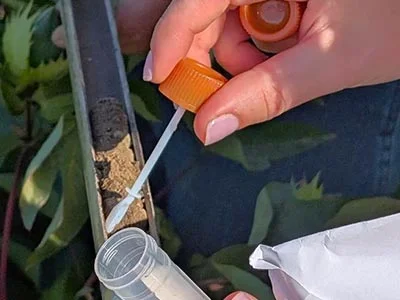
Soil is quite literally the foundation of farming. Without it, we could neither grow cotton nor support our growing global population. We know first-hand at Better Cotton that improved soil health can enhance productivity and yields, which also directly improves farmer incomes. Not only that, but many soil health management practices are also climate change mitigation measures. These measures stand to make a big impact when considering that global soils contain more carbon than vegetation and the atmosphere combined.
That’s why soil health is one of five impact targets that we are developing at Better Cotton as part of our 2030 Strategy, and an area we will be focusing our attention on over the coming weeks.
In our new Soil Health Series, we’re exploring the wonderful and complex universe beneath our feet, looking at why good soil health is so important and what Better Cotton, our partners and Better Cotton Farmers are doing to support healthy soils and the future of sustainable agriculture.
To kick off the series, we outline the five key factors that impact soil health. Learn more in the video above.
Look out for more content over the coming weeks, or visit our soil health webpage to learn more.
Do you want to know what the largest cotton sustainability programme in the world is up to? Keep up to date with the latest developments and hear from BCI Farmers, Partners and Members in the new BCI Quarterly Newsletter. BCI Members also receive a Monthly Member Update.
Leave a few details below and you’ll receive the next newsletter.
The Better Cotton Living Income Project: Insights from India
Please fill in this request form to receive the full report: The Better Cotton Living Income Project: Insights from India