








| Location: | Brazil |
|---|---|
| Start date: | 05/03/2026 |
| Contract: | Consultancy |
| Closing Date: | 28/02/2026 |
| Full Description: | View PDF |
Background
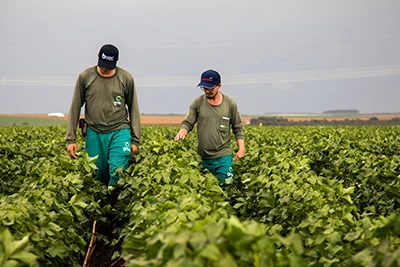
Brazil is one of the world’s major cotton-producing countries, supplying a significant share of the fiber used by global brands and retailers. Production systems in key regions are characterized by high reliance on synthetic pesticides, supported by strong agronomic knowledge, large-scale mechanisation and a focus on yield performance. At the same time, international buyers are increasingly interested in sourcing cotton produced with reduced chemical intensity and stronger alignment to Integrated Pest Management (IPM) principles.
Despite this emerging demand, there is limited clarity on the practical business implications for Brazilian farmers of transitioning away from pesticide-intensive production. Key uncertainties remain regarding cost structures, yield impacts, risk exposure during high-pressure pest years, and the level of incentive required to make such transitions commercially viable.
Better Cotton Initiative aims to address this gap by commissioning a sector-informed study that brings together agronomic evidence, economic analysis, risk insights, market perspectives and carbon considerations. The study will support supply chain actors and BCI in understanding what feasible transition pathways could look like and what forms of support may be needed.
Purpose of the Assignment
The objective of this assignment is to develop a Brazil specific reduced-pesticide roadmap that assesses the agronomic, economic and risk implications of transitioning from current pesticide- intensive systems to a set of feasible IPM- and biological-based alternatives. The consultancy will compare farmer income and financial risk under different scenarios, evaluate the level of market or carbon-based incentives required to support transitions, and translate findings into three practical pathways for adoption.
The assignment is intended to produce outputs that are technically rigorous while also being relevant to brands, retailers, traders, Embrapa, ABRAPA and other stakeholders. The roadmap should support sector alignment and guide Better Cotton Initiative’s engagement with supply chain partners.