











By Hélène Bohyn, Policy and Advocacy Manager at the Better Cotton Initiative, and Ioana Betieanu, Communications and Public Affairs Director at Organic Cotton Accelerator
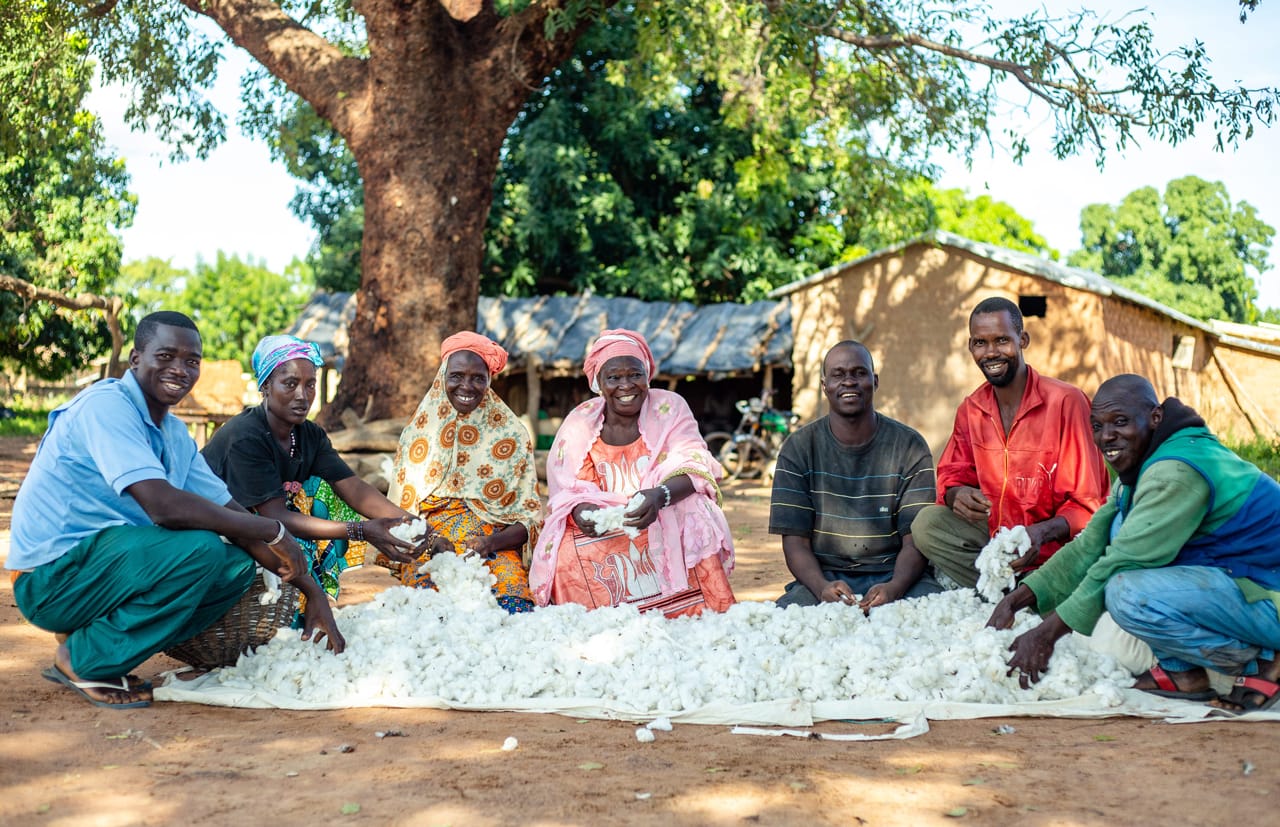
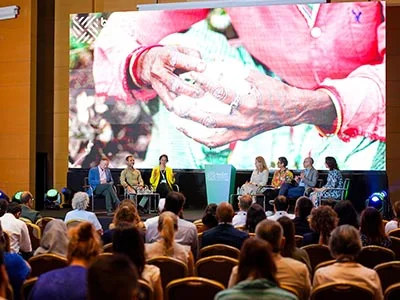
The floor was finally theirs. At this year’s OECD Forum on Due Diligence in the Garment and Footwear Sector, the Better Cotton Initiative (BCI) and Organic Cotton Accelerator (OCA) brought India’s smallholder cotton farmers, too often the unheard backbone of global supply chains, into the Human Rights and Environmental Due Diligence (HREDD) conversation.
The online session: Invisible no more: Elevating India’s cotton growers’ voices in HREDD, gathered smallholder cotton farmers from across India, alongside representatives from brands and civil society, creating a unique space for discussion.
Moderated by Shankhamala Sen, Programme Implementation Manager at OCA India, and Saleena Pookunju, Senior Programme Manager at BCI India, the discussion featured farmers from three Indian states: Gopalbhai Vashrambhai Charaniya (Gujarat), Pankajini Nial (Odisha), and Vaijayanti Gokhale (Maharashtra), alongside Chandrakant Kumbhani of Ambuja Foundation and Claus Teilmann Petersen of BESTSELLER.
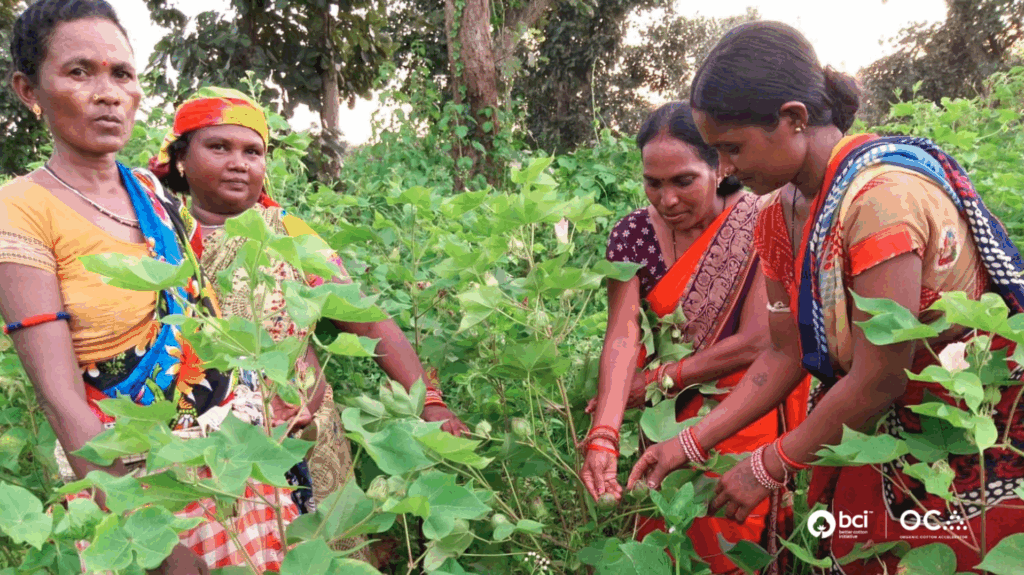
While the HREDD acronym might be unfamiliar to most farmers, the realities behind it are not. With clarity and confidence, all three farmers drew on practical examples, showing that meaningful progress depends on long-term investment, fairer economic incentives, and approaches that reflect the pressures they face. Their messages were clear, at times urgent, and always grounded in lived experience.
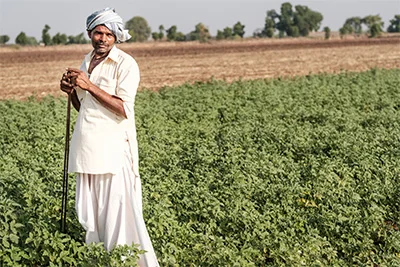
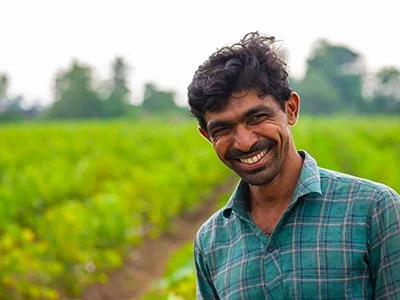
“Our goal is to protect the rights of workers” – Gopal Charaniya, from Gujarat, India
Gopal, who serves on a village-level Decent Work committee, said: “Our goal is to protect the rights of workers. We discuss the day-to-day conditions of the workers as well as the situation of their children, and we take care that there is no injustice or bad experience for them.”
Pankajini reflected on the challenges women face in farm decision-making. “Women have historically been excluded from farm decision-making,” she said, acknowledging how past barriers silenced women’s voices. Yet she emphasised that change is underway. Today, she works with 500 women farmers, training and mobilising them to help transform the fashion system, even as entrenched gender norms persist.
Another dimension to the conversation was added by Vaijayanti, who highlighted how market prices often fail to reflect the effort required to farm sustainably. Discussing her transition from conventional to natural farming methods, she described the negative impact that chemical fertilizers had on her soil, and the long-term dependency this created. She stressed that expanding regenerative farming will require better local infrastructure: “If inputs were available locally, farmers could be more independent.”
Offering a broader perspective, Chandrakant Kumbhani, Chief Operating Officer at Ambuja Foundation, emphasised that “if we want to see impact at scale there needs to be significant investments”. He highlighted with optimism the growing momentum toward regenerative practices in India, supported also by government priorities, and noted that when supply chain partners layer additional support such as training, infrastructure, and market linkages, on top of that foundation, communities experience more durable change.
Echoing this, Claus Teilmann Petersen, Stakeholder Engagement and Human Rights Manager at Bestseller, stressed that while much due diligence attention remains on factories, the most severe risks lie further upstream, at the farming and ginning levels.
“If inputs were available locally, farmers could be more independent” – Vaijayanti Gokhale, from Maharashtra, India
Claus noted that the transition requires shared responsibility across brands, civil society and trade unions – not regulations targeting only a few large companies. He added that multi-stakeholder initiatives have a crucial role to play in ensuring farm-level progress translates into meaningful due diligence, even when the market does not always reward it.
Together, their perspectives reinforced a clear message: lasting progress in HREDD depends on coordinated action across the entire supply chain.
Due diligence can only succeed when companies work with farmers and field partners, shouldering responsibility rather than shifting it down the chain. Smallholders are increasingly being positioned as duty-bearers, despite due diligence being, by definition, a corporate responsibility. The opportunity truly lies in supporting farmers through knowledge-sharing, capacity strengthening and co-creation of ecosystems that work for them and that enable everyone to identify and address risks collaboratively.
BCI and OCA reiterated that due diligence is only credible when it starts at the farm level, reflects the realities and contexts of agricultural production, and recognises the often-invisible leadership of women farmers.
If this year showed that it is possible to bring farmers’ voices into the OECD Forum, navigating interpretation across languages and the inevitable technical complexities of online participation, the next ambition is clear: farmers not just online, but on stage, with a seat at the table where their expertise belongs.