


Collaboration and progress: this is what made 2025 a landmark year for the Better Cotton Initiative (BCI). With the launch of a new product label, backed by third-party certification and supply chain traceability, and our non-stop work with our diverse stakeholders to deliver and measure impact, it’s been a period of transformation for us and our community. As 2025 draws to a close, let us take a look at some of the biggest milestones of the year.
New name, new label, new logo
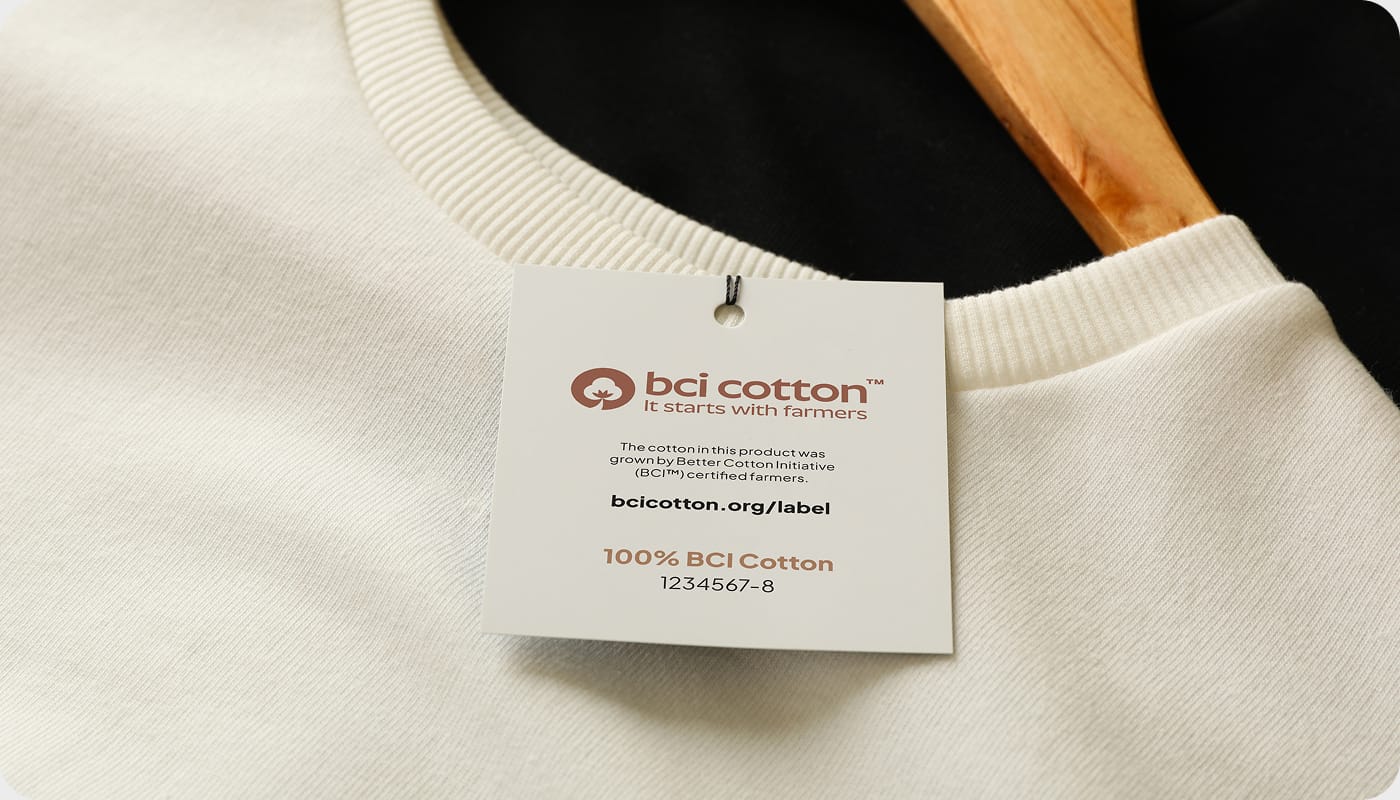
As the world’s leading cotton sustainability programme, BCI has always seen World Cotton Day as a highlight of any year, but in 2025 it was extra special, as we took the opportunity to launch an innovative new product label and a refreshed brand identity.
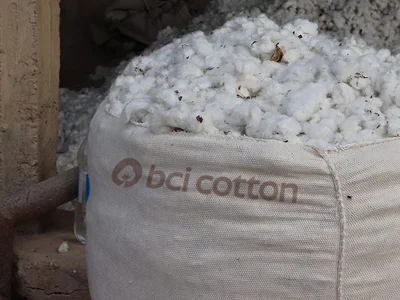
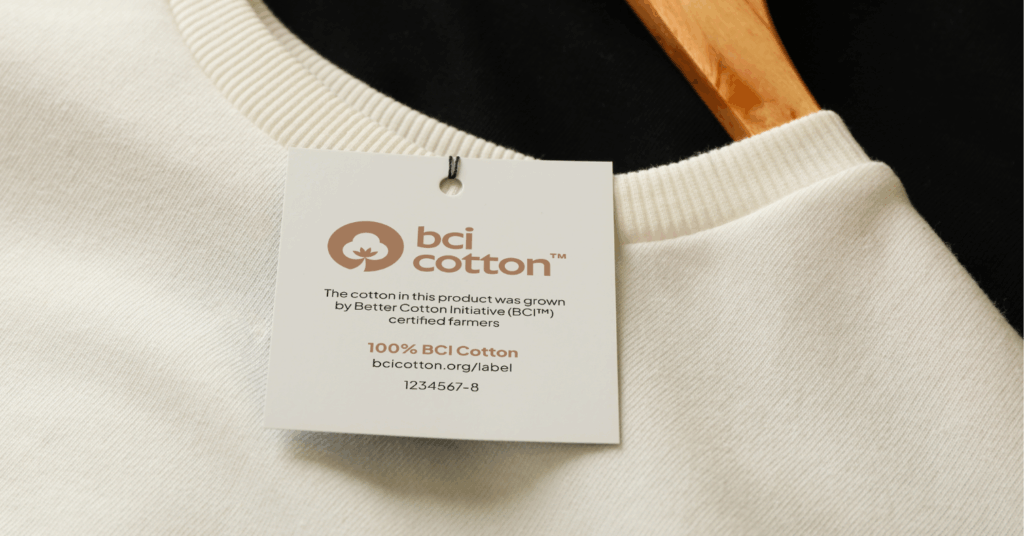
Our new label enables retailers and brands to claim with confidence that their products contain Physical BCI Cotton, certified by a third-party body, and which has been traced from its country of origin. The BCI Cotton label will be in stores soon, and we have already approved over 100 organisational and product-level claims from our Retailer and Brand Members.
Alongside this, we also updated our logo, refreshed our design, and adopted our original name of the Better Cotton Initiative, having been known simply as Better Cotton in the past few years. Once again, we took the initiative.
Transparency and confidence
To make our new label possible, we have been working hard on two key actions: traceability and certification. Early this year, we completed our transition to become a certification scheme, boosting impartiality and independence in field-level monitoring and assessments of cotton supply chains.
We now partner with more than 50 certification bodies, and 600 auditors globally have been trained to deliver audits against our standards. So far, over 1,600 suppliers, manufacturers, retailers and brands have received BCI certification, enabling them to source Physical BCI Cotton.
Meanwhile, we have continued to develop our traceability solution to increase both supply and demand. Over 50% of BCI Cotton entering global fashion and textile supply chains is now traceable, and 27,000+ metric tonnes (MT) of Physical BCI Cotton have been traced from cotton gins to BCI Retailer and Brand Members this year.
In 2025, BCI Traceability was launched in both Australia and Brazil, meaning that Physical BCI Cotton can now be sourced from 15 countries in total. On top of this, we have now made it possible for retailers and brands to see a product’s route-to-market all the way back to the ginner level for Physical BCI Cotton products from most countries, whilst developing a first-mile traceability app to ensure that our solution is inclusive of smallholder farmers.
Measuring and demonstrating impact
At BCI, our mission is to help cotton communities survive and thrive while protecting and restoring the environment. To ensure we are driving progress towards this goal, data and evidence are at the heart of everything we do.
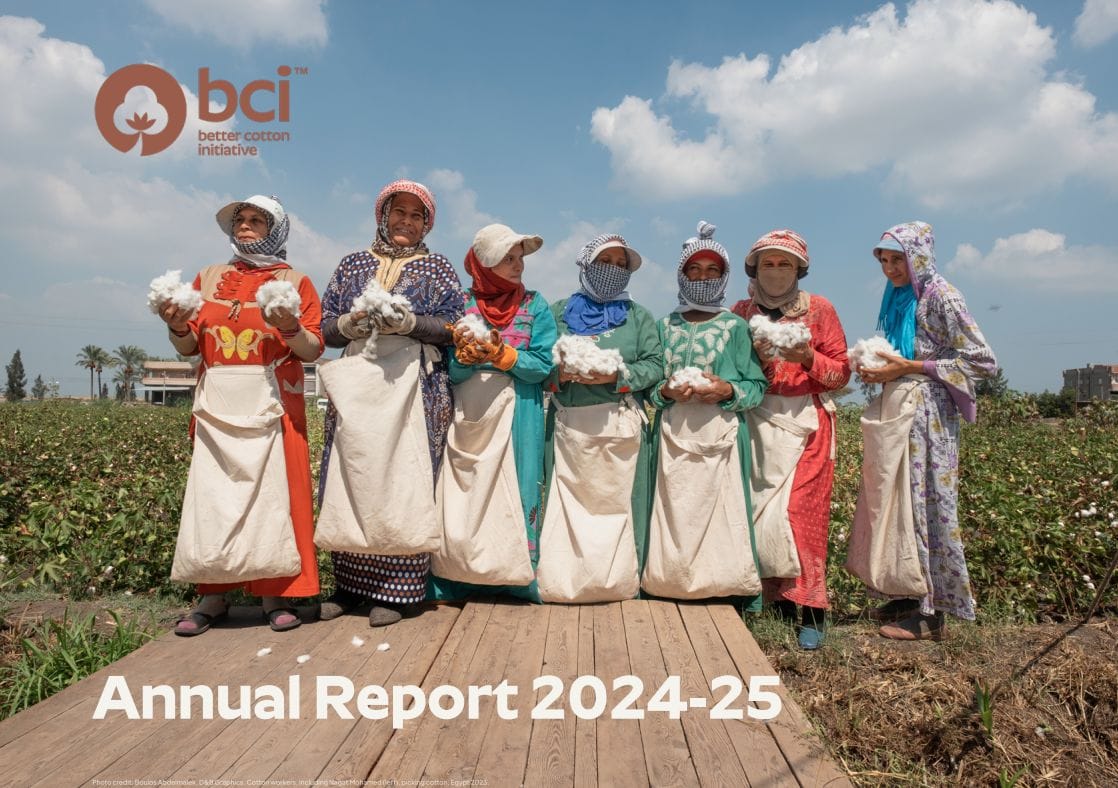
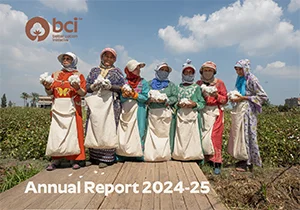
In 2025, we launched a range of reports that explore the reach and impact of our work, including our Annual Report, our 10-Year US Impact Report, and our Growth and Innovation Fund Annual Report. Here are some key highlights from these publications:
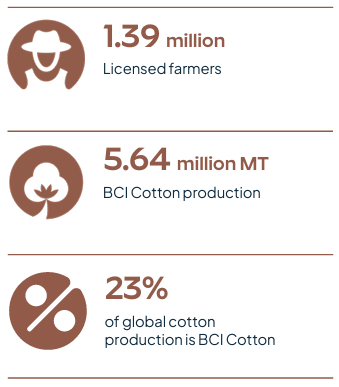
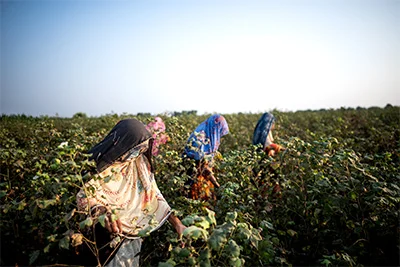
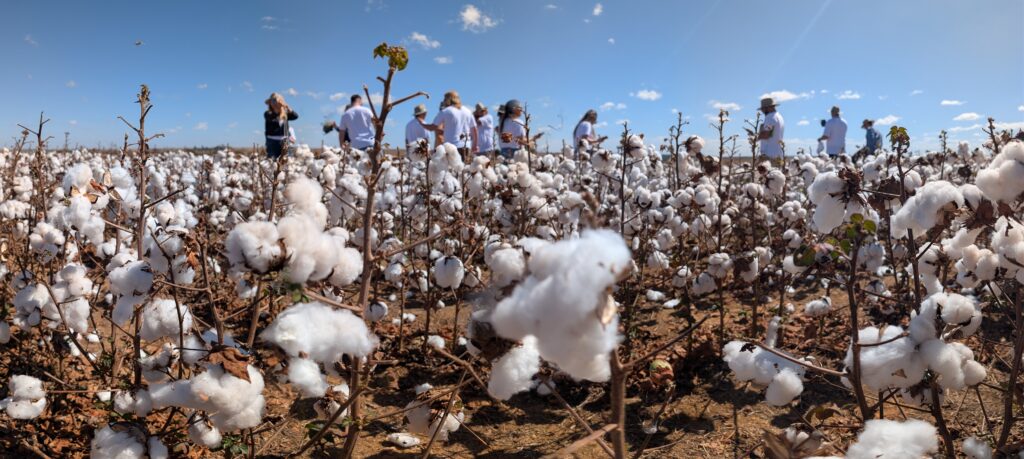
- As of the 2023-24 season, BCI Cotton accounts for 23% of global production, up from 22% last season. Around 1.4 million licensed farmers produced 5.6 million metric tonnes (MT) of BCI Cotton across 15 countries
- BCI’s network of growers and collaborators in the United States now spans 17 states, including more than 300 licensed growers who produce over 11.5% of the country’s total cotton volumes
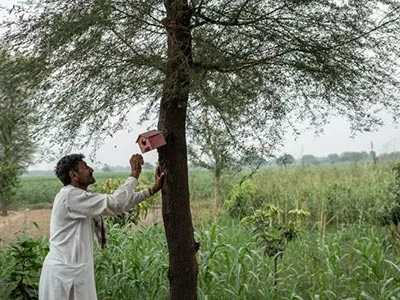
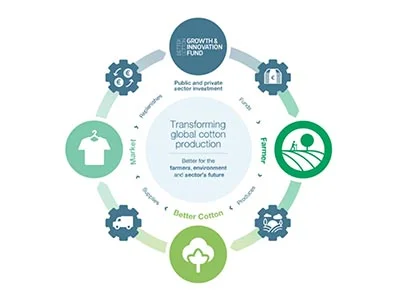
- In 2023-24, our Growth and Innovation Fund (GIF) supported 1,005 women-only learning groups, 6,985 drip irrigation systems, 11,108 bio-input centres, and the planting of 2,168,743 trees
- In addition, we also collaborated with multistakeholder initiatives including Cascale and Textile Exchange to create new guidelines on how the textile sector can effectively use Lifecycle Assessments, and released a new Decent Work roadmap informed by a 2020-2025 progress report.
Collaborating with our multistakeholder network
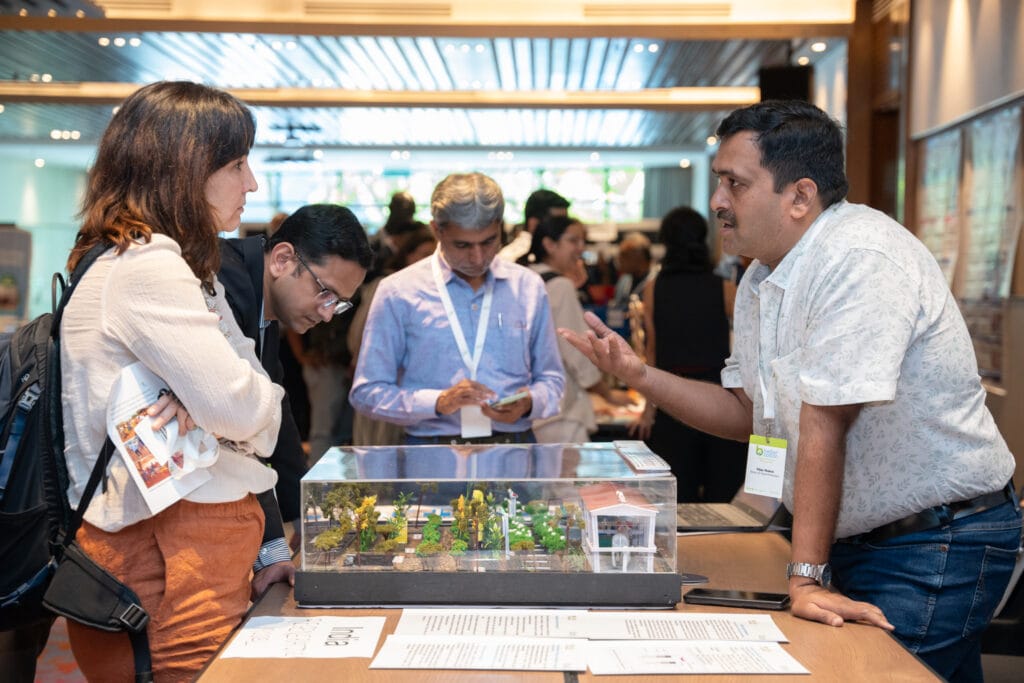
We wouldn’t be able to achieve any of this without the support of our network of 2,500+ members. We are in constant dialogue with our members, and this year we have hosted over 200 events globally. From in-person workshops across 10 locations to webinars and field trips, we connected with over 12,000 participants throughout the year.
In February, our programme partners came together in Malaysia to share learnings and spotlight innovations. Later in the year, representatives from our large farm countries connected in Brazil for Large Farm Week, where they discussed opportunities across their regions, from biological pest management to traceability systems and scientific advancements.
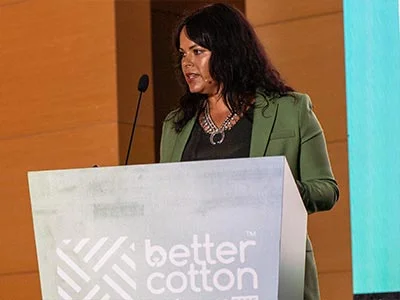
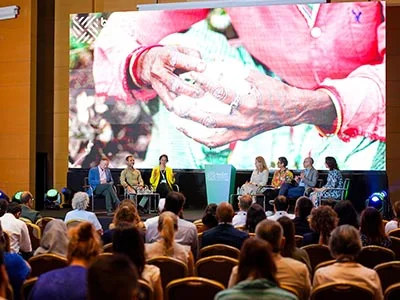
Our annual conference was held in June in Türkiye, welcoming 370+ attendees from over 20 countries. During the event, we announced that BCI will become a fully regenerative standard, further strengthening our commitment to protect and restore the environment and improve conditions for cotton farming communities around the world.
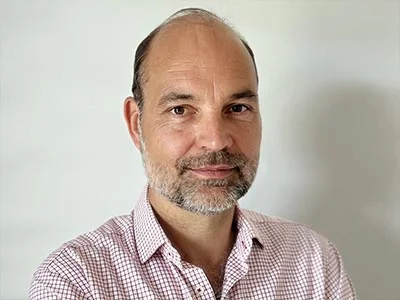
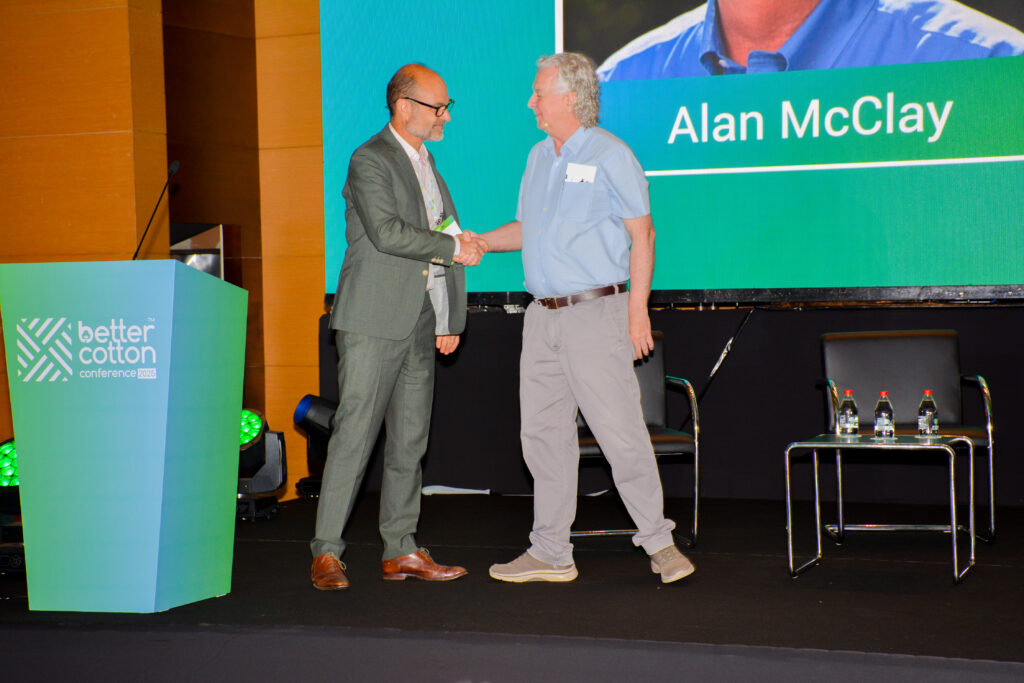
The conference was also an opportunity for participants to meet our new CEO Nick Weatherill, as we bid farewell to Alan McClay, who stepped down after a decade at the helm of BCI.
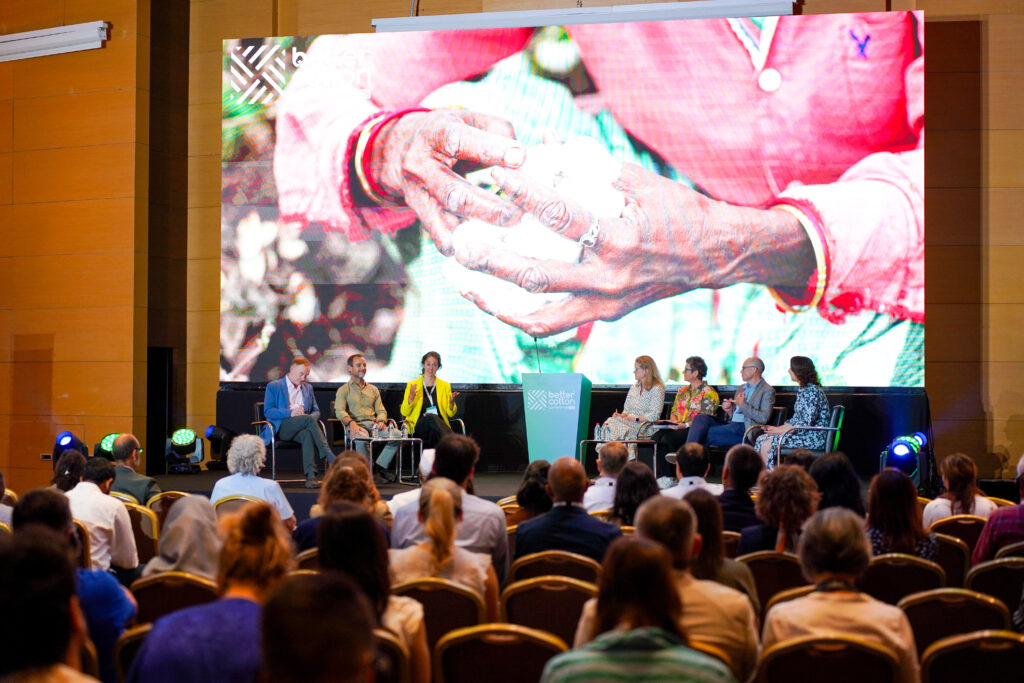
Conference panellists in a debate on traceability. Photo credit: Better Cotton Initiative/Evronas. Location: İzmir, Türkiye, 2025.
Looking ahead to 2026
With a new year upon us, we want to thank our community for their partnership and support throughout 2025. We look forward to continuing to work together to transform cotton farming and drive positive changes in 2026 and beyond.